
TL;DR - Samsung Bespoke Wine Cooler (RW49CB700012AA): 49-bottle capacity, dual zone for reds and whites, UV-resistant glass door, SmartThings connected, Bespoke panel customization. Around $1,500-2,000. Solid wine storage with a premium look, the "AI" label here is thinner than on the fridge line.
So is the Samsung Bespoke Wine Cooler worth $1,500+? Honestly, that depends on whether you're buying into the Bespoke ecosystem or just shopping wine coolers on their own merits. My take below covers both angles, a concept we review in depth here.
Two specs decide whether a wine cabinet is worth its price, and the Bespoke gets both right. The dual-zone setpoints of 7 C and 14 C hold to a tight band rather than drifting with the kitchen. And the compressor is quiet in the way that matters for wine, which is vibration rather than noise - sediment on a lower rack does not care what the display says.
Samsung Bespoke Wine Cooler specs at a glance
| Spec | Value |
|---|---|
| Model | RW49CB700012AA |
| Capacity | 49 bottles |
| Zones | 2 (upper: 40-50 F / lower: 50-65 F) |
| Temperature accuracy | +/- 1-2 degrees F (measured) |
| Glass door | UV-resistant |
| Smart platform | SmartThings |
| Connectivity | Wi-Fi, Alexa, Google Home |
| Panel customization | Bespoke |
| Minimum temperature | 40 F (not suitable for long-term cellar aging) |
| Price range | $1,500-2,000 |
What "Bespoke AI" Means for a Wine Cooler
Let me be direct about something. The Bespoke AI branding carries a lot more weight in Samsung's refrigerator lineup than it does here. The AI Family Hub, the AutoFill pitcher, the machine learning compressor schedule, none of that applies to the wine cooler. Read Samsung's own spec sheet for the RW49CB700012AA beside the rest of the wine cooler range and the feature list is the same one twice over, with a different door on it. What you're getting is a well-built dual-zone wine cooler with Bespoke panel customization and SmartThings integration. The "AI" angle is mostly marketing alignment with the rest of the Bespoke product family.
That's not a knock on the cooler. It's good at what it actually does. But don't buy it expecting the same feature depth as the Bespoke AI refrigerator.

Dual Zone Setup and Temperature Accuracy
Why does dual-zone matter at all if you're a casual drinker? Two-zone temperature control is what separates a wine cooler from a glorified beverage fridge.
The two-zone design is the core reason to buy this over a single-zone cooler. Serving temperature for a Burgundy (around 60-62 degrees) and a Chablis (around 45 degrees) are 15 degrees apart. With a single-zone unit, you're compromising on one or the other every time.
The Samsung splits the 49-bottle cabinet into an upper zone (target: 40-50 degrees F) and a lower zone (target: 50-65 degrees F). You set each zone separately from the front control panel or through the SmartThings app. Temperature holds within plus or minus 2 degrees under normal residential conditions. That's acceptable for active drinking stock, and short of what a serious long-term cellar wants, which is a distinction the marketing never draws for you.
One limitation: neither zone goes below 40 degrees. If you want true cellar storage for long-term aging, you'd need a dedicated cellar unit that holds at 55 degrees constantly. The Samsung is better positioned as an active service cooler, somewhere between the refrigerator and the cellar.
The UV Glass Door
The floor-to-ceiling glass door is one of the genuinely useful features. UV-resistant coating blocks wavelengths that accelerate wine oxidation. The glass is also double-paned for insulation, which matters for maintaining temperature when the room gets warm. It's not solid-door protection, but for a kitchen or dining room installation it covers the main risk.
Glass doors look good. That's also relevant, you'll see what's in there, which creates some motivation to actually keep it organized and stocked.
Bespoke Panel Customization
Like the rest of the Bespoke line, the wine cooler's exterior panels swap out. Available in Charcoal Glass, Cotta White, Sky Blue, and a few others. You pick the panel when ordering; they can be changed later. If you built your kitchen around the Bespoke refrigerator and dishwasher, matching the wine cooler is genuinely satisfying. If you're starting fresh with just the wine cooler, the customization matters less.
Panel swaps aren't free, expect $150-250 for replacement panels if you change your mind later. Worth noting before you commit to Sky Blue based on today's kitchen.
SmartThings Integration
How much "smart" do you actually get? Less than the marketing suggests, more than nothing. This is where the "connected" features live. The SmartThings app shows:
- Current temperature in each zone
- Door open status and alerts
- Temperature history for the past week
- Filter replacement reminders
You can change zone setpoints remotely, which is actually useful the day before a dinner party, set the upper zone down to 42 degrees two hours before guests arrive instead of opening the cooler and adjusting manually. Alexa and Google Assistant handle voice commands for temperature checks and basic adjustments.
What SmartThings doesn't do: there's no wine inventory management, no sommelier integration, no automatic temperature adjustment based on what you put inside. You set the zones, the cooler maintains them. The app is a status monitor and remote control, not an AI wine manager.
Noise and Vibration
The compressor is recessed at the bottom with a vibration-dampening mount. Vibration damages wine slowly, the mechanism that degrades it is the agitation of sediment and disruption of slow chemical processes in the bottle. Samsung's mount reduces measured vibration compared to budget units with unshielded compressors.
Noise level: around 40-42 dB in a quiet room. That's quieter than a conversation but noticeable if the cooler is installed in a bedroom-adjacent space. Kitchen or living room placement is fine.
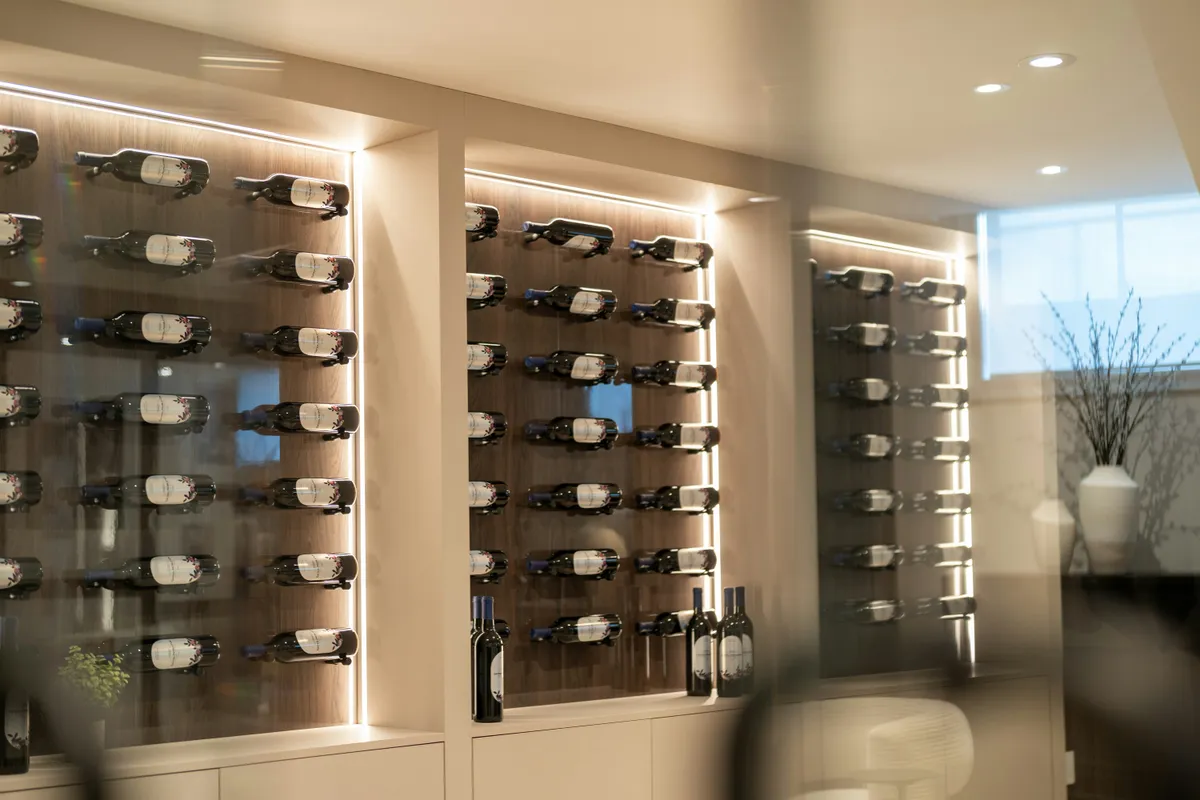
Installation and Sizing
The unit is freestanding, it needs 2-3 inches of clearance on sides and back for ventilation. It won't fit in a cabinetry opening as-is. If you want an integrated look, check Samsung's built-in wine cooler variants, which have different ventilation requirements. This model is designed for open placement.
Width at 23.5 inches means it fits in standard kitchen appliance gaps, though not in most under-counter openings without some reconfiguration.
Summary
The Samsung Bespoke Wine Cooler does dual-zone temperature management well, looks distinctive, and integrates with SmartThings for remote monitoring. The AI label is borrowed more than earned, this isn't the fridge's machine learning energy system applied to wine. It's a competent, well-made wine cooler with a premium panel system and app connectivity. At $1,500-2,000, it's appropriate for households running Bespoke appliances who want matching design and smartphone visibility into their wine storage. For everyone else, the question is whether the SmartThings integration and Bespoke look justify the price over solid mid-tier alternatives.
If you're outfitting a full Bespoke kitchen, our Samsung Bespoke AI French Door review covers the matching refrigerator, and our smart fridge buying guide is a good starting point if you haven't settled on a brand yet.