
TL;DR - The right ottoman does three jobs at once: extra seating, footrest, and (with a tray) a coffee table. Size it to roughly two-thirds the length of the sofa run, keep the top near seat height, and leave about 18 inches between ottoman and sofa. Pick a contrasting fabric instead of matching the sofa, and choose a performance fabric if the room sees kids or pets. For storage ottomans, look for a lift-assist hinge.
Here's the mistake this category invites. A delicate velvet or mohair ottoman looks beautiful in a showroom, then meets a toddler or a Labrador. The fabric decision matters more than the shape, the price or the brand. Performance fabrics exist for exactly this reason, and a few extra hundred dollars on the upholstery tends to matter more than the same money on a fancier frame.
Designers have been moving that way for a while. Houzz's coverage of cocktail ottomans (upholstered coffee tables) lists them among current coffee table trends, and House Digest describes ottomans replacing coffee tables for a cozier, softer look that also adds storage, extra seating and more texture. The trend makes sense when a big sectional leaves awkward floor space for a rigid rectangular table.
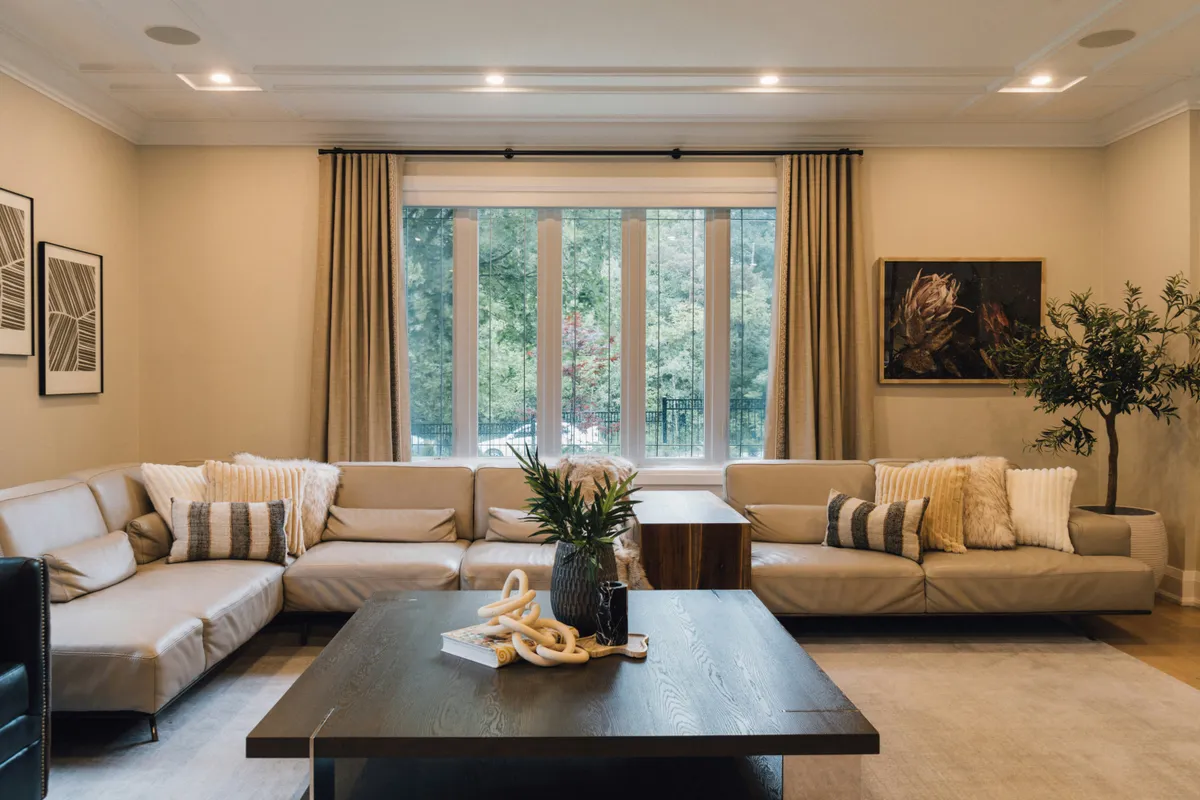
Why Use an Ottoman Instead of a Coffee Table?
Three reasons come up repeatedly. An ottoman doubles as a footrest, which a coffee table doesn't. It can seat extra guests at a party. And it's gentler for households with small kids: rounded corners and a soft surface instead of sharp edges on wood or glass.
Price isn't a reason either way. Examples from current retailer listings: Article's Maribo storage ottoman runs from 199 USD (19 inch) to 549 USD (48 inch, leather), West Elm lists its Andes leather ottoman at 1,299 to 1,399 USD, and Pottery Barn's Manhattan leather ottoman ranges from 1,319 to 4,198 USD depending on size and leather. That spread is as wide as it is for coffee tables, so budget by material and size, not by the category.
Renters get extra mileage here too. If you ever need to sublet your apartment furnished, an upholstered ottoman survives a stranger's daily use better than a glass coffee table does.
The trade-off is the surface. Without a tray, an ottoman is bad for drinks, because books slide and glasses tip. House Digest notes that coffee tables stay the better choice for households that host a lot and want easy cleanup, and that's fair. A tray with a solid base fixes most of the problem. Pick one with a rim, a flat bottom and a finish that won't mark the fabric when you lift it off.
What's the Right Size for an Ottoman?
Sizing is where most people go wrong. Three measurements matter, and they relate to the furniture around the ottoman.
Length: about two-thirds of the sofa run
A widely used design rule sizes the surface at roughly two-thirds the length of the sofa it faces. On a 96-inch sectional run, that's about 60 to 65 inches. The rule applies whether the ottoman is rectangular, round or square. A 48-inch ottoman in front of a 96-inch run looks undersized, and a 72-inch piece looks like a second sofa jammed into the room.
For a standard 84-inch sofa, the same ratio suggests an ottoman around 50 to 56 inches in its longest dimension, and a smaller 36 to 48 inch piece is the safer choice if the room is tight. Treat the ratio as a starting point and check it with tape on the floor.
Height: at or just below seat height
Houzz says coffee tables should be the same height as the surrounding seating, with 18 inches a good average. For an ottoman used as a footrest, going an inch or two lower keeps it from competing with the seat cushion. Check your own seat height with a tape measure instead of assuming 18 inches.
Distance from the sofa: about 18 inches
Houzz recommends keeping an upholstered ottoman about 18 inches from a sofa or chair, so you can put your feet up and still step around it. Much closer feels cramped. Much farther breaks the visual link and you might as well have a separate coffee table.
What Types of Ottoman Should You Consider?
Four main categories with different jobs.
The Cocktail Ottoman (Oversized)
The big piece, often 48 inches or more across, that anchors a sectional. It acts as coffee table and footrest, and with a tray it takes drinks and books. It suits open-plan rooms with large seating groups.
The downside is weight and flexibility. A large cocktail ottoman is awkward for one person to move, so plan its position before you buy and don't expect to rearrange the room casually. Article's Cigar 48-inch leather ottoman is listed at 999 USD, which gives an idea of the cost for solid leather at that size.
The Storage Ottoman
A box with a hinged top, upholstered to look like furniture. Good for households with kids, blanket stashes or board games. Storage ottomans from Article, such as the Tivvi 35-inch square at 449 USD and the Maribo 48-inch leather at 549 USD, list a storage compartment. Crate and Barrel's Lounge II deep storage ottoman is 599 USD and the casters version is 749 USD. If the whole room is tight, vertical and hidden storage ideas go further than one box.
The hinge matters. A lift-assist hinge holds the lid open and lets it down slowly. A basic friction hinge can slam. Ask the seller which type the model uses, and read the reviews for pinched fingers before you buy.
Capacity per dollar varies too. Internal dimensions matter more than external ones, because thick walls and padding eat space. If the listing doesn't state the interior size, ask.
The Pouf
A small, round or square ottoman, usually 16 to 24 inches across. Article lists its Mia 18-inch pouf at 159 USD and its Otio 22-inch velvet ottoman at 299 USD. These work as accents or kids' seats, not as primary furniture. They're light and easy to move, and they bring color into a neutral room.
Poufs aren't coffee tables. They're not stable enough for a drink. Buy one only if you have a specific styling job in mind.
The Bench Ottoman
Long and narrow, commonly 48 inches or more by about 18 inches. A faux-leather storage bench from Wyndenhall, sold at Target, measures 48 by 18 inches and about 18.5 inches high, which is a typical footprint for this category. These work at the foot of a bed or along a wall, and many have storage inside. They're handy in a bedroom for sitting down to put on shoes.
How Do You Pick the Right Fabric?
Fabric determines how the ottoman wears. Three categories to know.
Velvet
Popular for ottomans, especially performance velvet. It looks rich, catches the light and hides minor wear. The downside is that traditional silk or cotton velvets crush and stain easily, so a red wine spill can mean a professional cleaning bill or a replacement.
Performance velvets (Crypton, Sunbrella, Revolution Performance Fabrics) are engineered to resist stains and moisture, and cost more on a custom piece. For a house with a dog and a child, that upcharge is the sensible place to spend.
Leather
Holds up to traffic, develops a patina and wipes clean. The cost is high, and Article's leather ottomans run roughly 500 to 1,000 USD for mid-size pieces, against 300 to 450 USD for comparable fabric ones. Full-grain leather ages well over decades. Bonded leather is a different story, because the surface layer is prone to peeling over time.
Leather is the right pick for households where the ottoman gets heavy daily use. It's the wrong pick if you want bright color or pattern, since leather mostly comes in browns, blacks, whites and the occasional cognac or burgundy.
Performance Linen and Cotton
The hidden gem. Brands such as Crypton, Revolution and InsideOut by Sunbrella make performance fabrics that look like natural linen and resist stains. They suit traditional or coastal rooms where velvet would look too formal.
What About Color and Pattern?
The contrast rule: the ottoman should be visually distinct from the sofa in a coordinated way. Three approaches work.
Color contrast: navy sofa, terracotta ottoman. Forest green sofa, blush ottoman. Charcoal sofa, mustard ottoman. The ottoman becomes the focal point of the seating area.
Texture contrast: linen sofa, velvet ottoman. Velvet sofa, leather ottoman. Same color family, different surfaces. Subtler, and better for formal rooms.
Pattern contrast: solid sofa, patterned ottoman. The ottoman becomes the room's personality piece. Avoid patterned sofa with patterned ottoman unless you know how to mix pattern, because it's easy to make a room look chaotic.
The one to avoid: an ottoman that matches the sofa exactly. It wastes the chance to add interest.
How Do You Style It?
Three pieces matter on top of the ottoman: the tray, the books and one decorative object.
The tray is the foundation. Choose a large tray for a large ottoman and a smaller one for a smaller piece. Wood, marble, brass or rattan, depending on the room's material palette. House Digest also mentions a newer twist: setting a small nesting table on the ottoman for a firmer surface.
The book stack: three to five large coffee table books, stacked horizontally. A horizontal stack reads as intentional, while books leaning vertically read as "I just put a book down".
The decorative object: one piece, never more than three. A small ceramic bowl, a candle in a sculptural holder, a small sculpture. Keep it lower than the tray's rim so the styling reads horizontally and not as a tower.
For more living-room styling guidance, see the smart TV setup options for matching your ottoman placement to the TV viewing distance.
How Do You Use an Ottoman in Each Room?
Not every room wants an ottoman, but most rooms can use one.
In the living room: a cocktail ottoman in front of the sectional, in place of a coffee table, is the setup that suits most open-plan rooms.
In the family room or playroom: a storage ottoman in a performance fabric. It holds blankets, board games or toys, and a stain-resistant cover earns its keep.
In the bedroom: a bench ottoman at the foot of the bed, in leather or performance velvet. Holds spare blankets and works as a seat for putting on shoes.
In the entryway: a small storage bench doubles as a shoe-changing seat and holds umbrellas or hats. IKEA's STOCKHOLM 2025 bench with pad is listed at 399 USD in the US, so check what's in stock before you plan around the old, cheaper STOCKHOLM bench.
In a home office: a small pouf or square ottoman that tucks under the desk gives you a place to prop your feet. Article's 22-inch Otio velvet ottoman at 299 USD is one example of the size.
What Should You Skip?
Three categories deserve a second look before you buy.
Very cheap tufted ottomans. Check how the tufting is done. If the buttons are only glued or stitched on the surface, they tend to pop off, and the fabric may sag with use. Read the reviews from owners at the one-year mark.
Round leather ottomans with thin metal legs. They can look good in photos and tip when you put weight on the edge as a footrest. Look at the base and ask how stable it is.
Floor puffs sold for kids' rooms, which can lose shape and don't take regular use well. A small proper ottoman or a pouf with a firm filling is the better buy.
The right ottoman is the kind of piece you don't think about because it just works. The wrong one is a constant low-grade annoyance: too small, wrong height, wrong fabric. Spend more on the upholstery than you think you need to, choose a performance fabric if there's any traffic, and add a proper tray. That's the whole formula.