
TL;DR - Prune most fruit trees in late winter, while they're dormant and before growth starts. Use thinning cuts to open the canopy, not heading cuts that force regrowth. Apples and pears get a central leader shape, peaches get an open center vase, and apricots and sweet cherries are best pruned in summer after harvest. A bypass hand pruner, bypass loppers and a folding saw cover most home orchard work. Skip the wound paint.
The most common way to get this wrong is to prune an apple tree like a hedge: sides trimmed flat every year, the centre never opened. A tree treated that way can go years without good fruit, and the cause is usually light rather than vigour. Opening the centre is the fix. It works best over two or three winters, because removing too much wood in one season provokes a wall of water sprouts.
Extension guides agree on the basics. Prune in late winter or early spring, just before active growth. Open the canopy so light reaches the middle. Remove dead, diseased and crossing wood first. The work takes an hour or so per tree once a year, and it's the cheapest thing you can do for fruit quality and tree health.
When Should You Prune Fruit Trees?
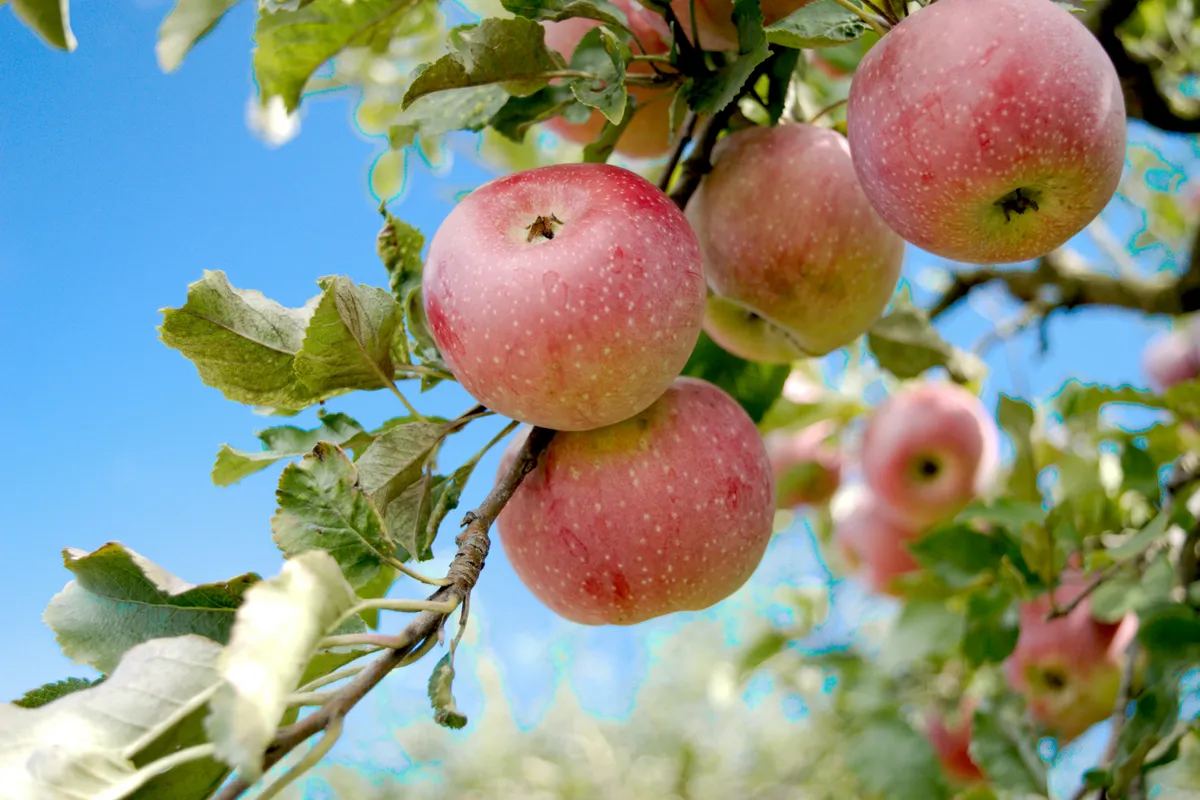
Late winter, with the tree still dormant and close to bud break. In colder regions that means late winter to early spring, and in mild climates it comes earlier. Cuts heal fastest when growth is about to restart, and without leaves you can see the whole structure.
Don't prune in a hard freeze. Frozen wood can splinter on the cut and bark can tear. Wait for a milder spell.
Summer pruning is a different tool. Light summer pruning (June to July in many regions) controls vigorous growth on young trees and lets sun into the canopy. It isn't a substitute for the dormant cut. The dormant cut shapes the tree; the summer cut fine-tunes it.
What about fall? It's generally a poor time. Fall pruning stimulates growth just as the tree should be hardening off for winter, and wounds stay open through the cold months.
Stone fruit has its own calendar in some regions. University of California guidance recommends pruning apricots and cherries in summer, after harvest and before the autumn rains, because the Eutypa fungus infects fresh pruning wounds when it rains in the weeks after pruning. Oregon guidance also stresses dry weather for cherry pruning to limit bacterial canker. If you live somewhere wet, that's a good reason to check local extension advice before you cut.
What Tools Do You Actually Need?
Three tools handle most home orchard pruning.
- Bypass hand pruners. The Felco 2 is the classic, with retail prices ranging from about 67 to 105 USD (86.71 USD on Felco America's site). Budget options that work fine: the Corona BP 3180D (roughly 26 to 43 USD) and the Fiskars PowerGear2 (roughly 26 to 46 USD). Avoid anvil pruners on living wood. They crush stems instead of slicing them, which leaves ragged cuts.
- Bypass loppers. For branches up to roughly 1 to 2 inches thick, depending on the model. Check the cutting capacity on the label.
- A folding pruning saw. For branches beyond lopper capacity. The Silky Pocketboy 170 is a popular choice, with retail prices around 45 to 71 USD depending on version, and its pull-stroke teeth cut quickly.
Keep the blades sharp. Dull pruners crush rather than cut, and crushed tissue heals slowly. A pocket diamond stone and a minute per blade between sessions keeps a good pruner working for years.
Sterilize between trees if you see any sign of disease. A spray of 70 percent isopropyl alcohol works, and extension advice for Eutypa-prone trees is to disinfect tools before and after pruning. Skip bleach on steel blades, because it pits and corrodes them.
What's the Difference Between Thinning and Heading Cuts?
Thinning removes a whole branch back to its origin. Heading shortens a branch back to a bud. They produce opposite responses, and most pruning mistakes come from confusing them.
A thinning cut opens up space, doesn't trigger a burst of regrowth at the cut point, and improves light. On an established tree, most of your cuts should be thinning cuts: competing branches, water sprouts, downward-growing branches and rubbing limbs.
A heading cut shortens a branch and forces vigorous regrowth from the buds just below the cut. You use it deliberately for two jobs. One is training young trees, to build branch structure where you want it. The other is renewing fruiting wood on peaches, where last year's shoots fruit once and are then cut back to force new ones.
The classic novice mistake is heading every branch tip on a mature apple tree because the branches look long. The tree answers with dozens of vertical water sprouts that don't fruit, and you spend the next winter removing them. Thin out the whole branch if it's wrong, or leave it alone.
Central Leader or Open Center: How Do You Train the Shape?
Two main shapes. The choice depends on the species and it's usually made in the first few years of the tree's life.
Central leader (apples, pears, sweet cherries)
One central vertical trunk with scaffold branches coming off it in tiers. Extension guides describe the shape as a Christmas tree, wider at the bottom, with each tier shorter than the one below so sun reaches every branch. Oregon State's home orchard guide covers the spacing and heights for specific rootstocks, and they vary by tree size, so check the figures for your own tree.
Branch angle matters. Branches that leave the trunk at a very narrow angle form weak crotches that can split under fruit load. Remove them or spread them with limb spreaders while they're young. A simple wood block wedged into the crotch does the job on a young tree.
Retraining a neglected tree usually takes two or three winters. In the first winter, remove competing upright leaders so one clear central trunk remains. In the second, choose the best-placed scaffolds for the lowest tier and take out the rest.
Open center (peaches, nectarines, plums, sour cherries, apricots)
No central trunk. The trunk is cut off low at planting, and three or four scaffold branches are selected to form a vase shape. The center stays open so sun reaches the inside of the tree. This matters more for stone fruit than for apples because peaches fruit on the previous season's shoots, and new shoots only grow well in well-lit parts of the canopy.
Open-center peaches need heavy annual pruning. Extension guides suggest removing about half of last year's growth, and one county extension guide says 60 to 80 percent of the previous season's new growth. Without that renewal, fruiting migrates to the outside top of the tree and the rest stops producing.
How Are the Species Different?
The general rules apply, but each species has quirks.
Apple
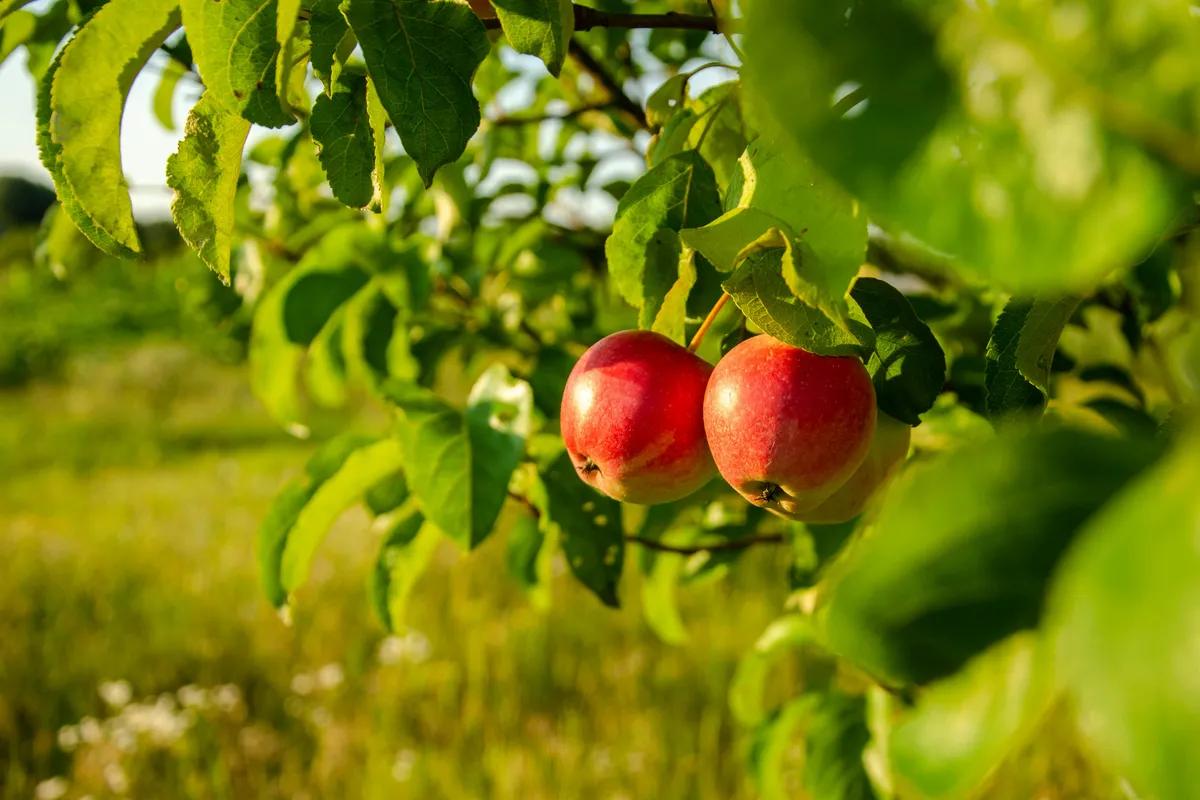
Fruits on spurs, the short stubby shoots that stay productive for years. Don't remove spurs unless they're badly placed or diseased. Apples forgive mistakes and recover well. Most popular varieties train to a central leader. Tip-bearing varieties fruit on branch ends and need lighter pruning, so check how your variety bears before cutting.
Pear
Pruned much like apple, with a central leader. Pears tend to grow more vertically, so spreading branches matters. Fire blight is the main pruning-time risk. If you find blackened, shepherd's-crook shoot tips, cut well below the visible damage, sterilize the tool between cuts, and take the prunings away from the orchard instead of composting them.
Peach (and Nectarine)
The species that needs the most pruning. Fruits on last year's shoots, so each dormant season a large share of growth has to come out to force fresh shoots. Open-center training is the norm. Prune just before bud swell in late winter or early spring.
Sweet Cherry
Usually trained to a central leader. Sweet cherries don't need heavy pruning once the structure is set. In regions prone to bacterial canker, such as the Pacific Northwest, summer pruning after harvest is advised over winter pruning, because winter wounds give canker organisms an entry point.
Sour Cherry (Montmorency, North Star)
Open center, like peaches, with lighter renewal pruning. Sour cherries fruit on one-year wood and on older spurs, so you don't need to remove as much as on a peach.
Want to extend the garden setup further? See the grass-less lawn alternatives guide for what to grow under and around fruit trees instead of turf. And if a heavy scaffold branch overhangs the house, think about what's underneath it too, our metal roofing systems guide covers how falling limbs and hail affect each roofing material.
What's the Right Aftercare?
Three things matter, and one doesn't.
The three that matter:
- Clean up the prunings. Diseased prunings (fire blight, canker, leaf curl) should be bagged or burned where local rules allow, not composted. Healthy prunings can be chipped for mulch. Don't leave them under the tree, because they can harbor pests and disease.
- Fertilize with restraint. Base feeding on a soil test and on how much new growth the tree made last year. Heavy nitrogen after a hard prune pushes soft, vertical shoots.
- Mulch the dripline with a couple of inches of wood chips, kept clear of the trunk itself. Trunk-touching mulch holds moisture against the bark and invites rot and rodents.
The thing that doesn't matter: pruning paint. The University of Maine Cooperative Extension says tree paints and wound dressings should rarely, if ever, be used by a homeowner, because they typically offer no benefit and can interfere with healing. A clean cut just outside the branch collar (the slightly swollen ring where the branch meets the trunk) is all the protection the tree needs.
Which Common Mistakes Should You Avoid Every Spring?
Three patterns show up in nearly every home orchard.
Mistake one: topping. Cutting the tops off tall branches because the tree got too tall creates a hat-rack tree that answers with hundreds of water sprouts. Instead, remove whole tall branches back to a lower side branch, which is a thinning cut. The tree gets shorter without the sprout explosion.
Mistake two: leaving stubs. Cutting halfway down a branch instead of back to its origin or a healthy bud. The stub dies back, invites disease and looks ugly. Cut to the collar or to a bud, never to bare wood in the middle of a branch.
Mistake three: pruning too lightly. People worry about hurting the tree and remove almost nothing. The result is a dense interior with poor airflow and more fungal disease. A well-pruned apple tree is open enough that light reaches the middle, and if you can't see through the canopy, it likely needs more work.
What Is the Annual Pruning Plan by Species?
| Species | Shape | When to Prune | How Much |
|---|---|---|---|
| Apple | Central leader | Late winter, dormant | Light to moderate; spread heavy renovation over 3 years |
| Pear | Central leader | Late winter, dormant | Light to moderate |
| Peach / nectarine | Open center | Late winter, just before bud swell | Heavy; about half of last year's growth or more |
| Sweet cherry | Central leader | Summer, after harvest | Light |
| Sour cherry | Open center | Late winter, dormant (local advice may say summer) | Moderate |
| Plum | Open center or central leader, depending on type | Late winter, or summer where disease pressure is high | Moderate |
| Apricot | Open center | Summer, after harvest | Light to moderate |
The first few winters of a tree's life set the structure for decades. Spend those winters reading your state extension's home orchard guide, watching extension videos, and, if you can, walking through a local orchard with someone who prunes for a living. There's no shortcut for learning to read a tree. After that, the annual hour per tree is some of the most rewarding work in the garden.