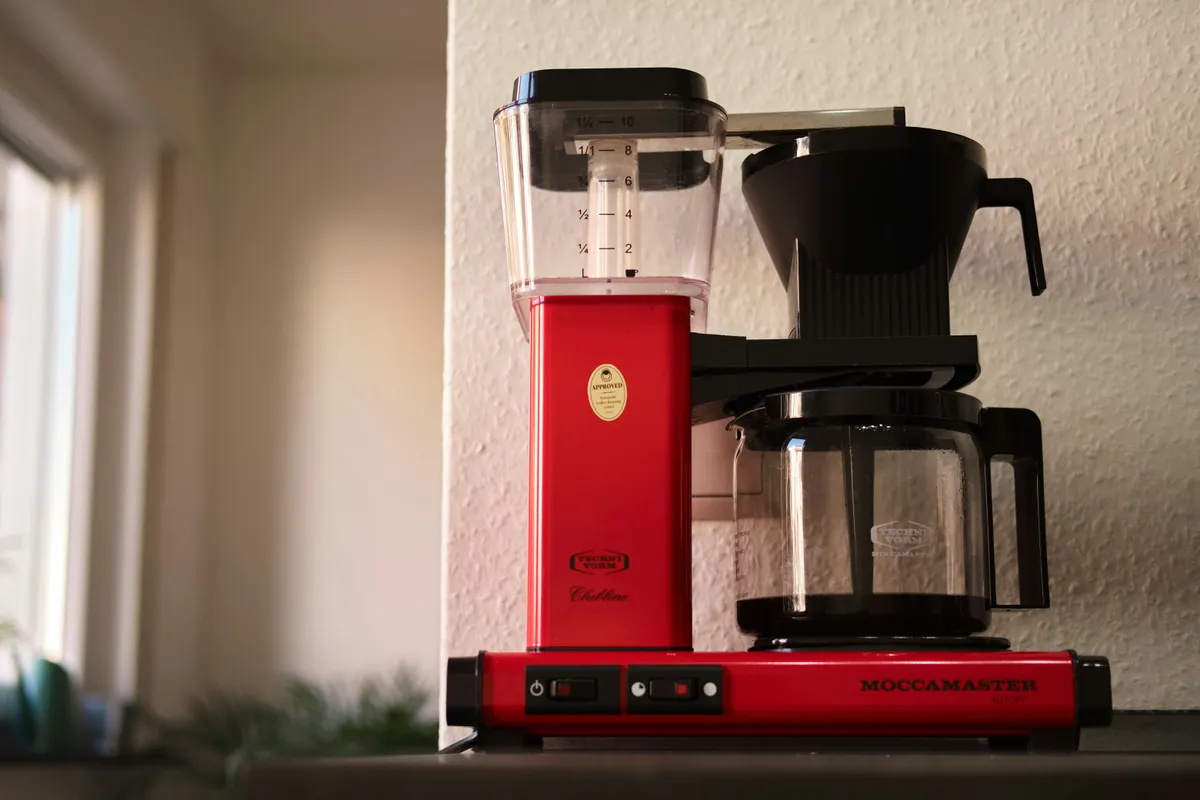
TL;DR - App control buys you one genuinely useful thing: changing or cancelling a brew schedule from bed. Everything else on the spec sheet, remote start, voice support, custom profiles, does not touch grind, water, or temperature, which are what decide whether the coffee is good. Check brew temperature (195 to 205 F, adjustable if possible) before any connectivity feature, pick Bluetooth over Wi-Fi unless you really brew from outside the house, and remember a fifteen-pound smart plug covers remote start on the machine you already own.
A coffee maker with an app costs roughly sixty to a hundred and twenty pounds more than the same machine without one. That's the question in a sentence: what does that money buy?
Manufacturers answer with a feature list. Remote start. Custom profiles. Notifications. Voice assistant support. It reads impressively and tells you almost nothing about whether the coffee improves, because most of it doesn't touch the coffee at all.
So let's separate the two.

Scheduling is the feature that earns its place
Almost every smart coffee maker's genuine value comes down to one thing: it brews before you're awake, and you can change your mind about when.
Ordinary programmable machines have done timed brewing since the 1980s. What they can't do is respond to a changed alarm. If you set 6:45 on the machine and then decide to sleep until 7:30, you get coffee that's been sitting on a hotplate for forty-five minutes, which is a reliable way to make it taste burnt.
An app fixes exactly that. Change the schedule from bed, or cancel it entirely. It's a small thing that happens every single day, which is the definition of a feature worth paying for.
Is it worth a hundred pounds? If your mornings are irregular, probably. If you get up at the same time every day, a twenty-pound programmable machine does the same job.
What the app can't fix
Here's where the spec sheets get quiet. What determines whether coffee tastes good?
Coffee quality is determined by grind size, water temperature, contact time, water quality, and how fresh the beans are. An app touches none of these. A connected machine making coffee from stale supermarket pre-ground will produce exactly the same disappointing cup as an unconnected one.
The exception is temperature, and it's worth understanding why. Proper extraction happens between 195 and 205 F, roughly 90 to 96 C. A great many cheap drip machines never reach it, sitting closer to 180 F, which under-extracts and gives you that sour, thin, faintly papery cup people blame on the beans.
Some smart machines let you set brew temperature. That is a real quality control, and if a machine offers it, that's the specification I'd check before any connectivity feature. Plenty of "smart" machines don't offer it and are simply ordinary drip makers with a radio inside.
Plenty of smart coffee machines cannot set brew temperature. They are ordinary drip makers with a radio inside.
Wi-Fi or Bluetooth changes what you actually get
This distinction gets buried and it determines whether the headline feature works at all.
Bluetooth only works within range, roughly ten metres and through no more than a wall or two. You can start the machine from the bedroom. You cannot start it from the train. Bluetooth machines are cheaper and, notably, keep working when the manufacturer's servers go away.
Wi-Fi gives genuine remote control and voice assistant integration, and it makes the machine dependent on a cloud service. When that service is retired, and appliance clouds do get retired, the smart features stop. The machine still brews. The app becomes decoration.
I'd weigh that more heavily on a coffee maker than on most appliances, because a coffee maker is a ten-year purchase and app support rarely lasts that long. The same reasoning applies across connected kitchen kit, which our smart home beginner's guide goes into at the level of the whole house.
Descaling reminders are better than they sound
This is the feature I'd have dismissed and shouldn't have.
Limescale is the main killer of coffee machines in hard water areas. It coats the heating element, which drops brew temperature, which quietly ruins the coffee months before the machine actually fails. Most people descale when the machine starts struggling, which is long after the coffee started suffering.
A smart machine counts brew cycles and water volume, and prompts you on a schedule that reflects actual use rather than a guess. Some track water hardness if you tell them your area's rating.
That's genuinely useful, and it's the same argument that makes connected dishwashers worthwhile, covered in our smart dishwasher guide.
Grind-and-brew machines: more to go wrong
Machines with built-in grinders are the most common "premium smart" category, and they carry a trade-off nobody mentions in the listing.
Burr grinders in combined units are usually small and made to a price. They produce a less consistent grind than a dedicated grinder costing half as much. You're paying for convenience, not quality, and that's a legitimate choice, but it should be a conscious one.
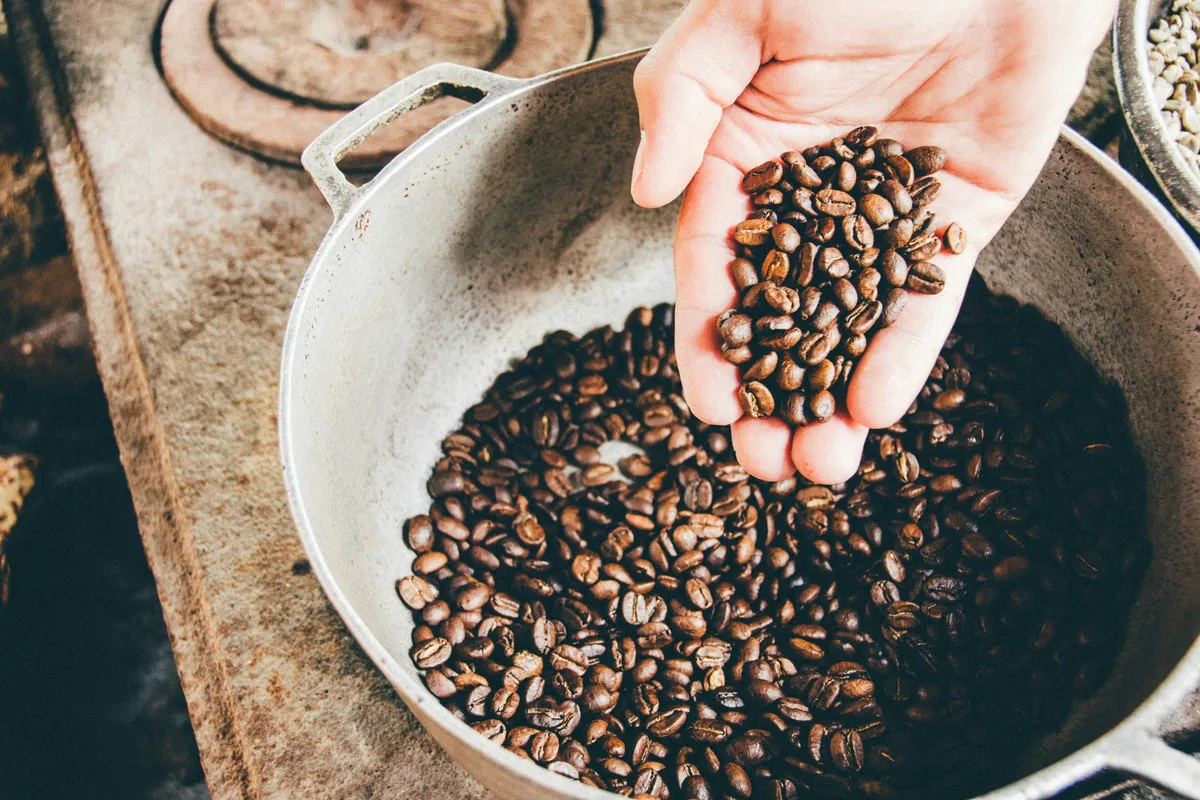
They're also the part that fails. The grinder has moving parts, it handles an abrasive material, and oily beans gum up the chute. Reviews of combined machines are full of grinder jams two years in. If you buy one, avoid oily dark roasts and clean the chute monthly.
What breaks after the grinder? Usually the water pump, then the heating element on hard water, then the touchscreen. The radio almost never fails. Take that ordering seriously when you weigh an extended warranty.
Water is the ingredient nobody adjusts
Coffee is about 98% water, and in a hard water area that water carries 200 to 400 mg of dissolved minerals per litre. Those minerals do two contradictory things: a moderate amount improves extraction, and too much both dulls the flavour and scales up the machine.
Most smart machines ignore this entirely. A few let you enter your water hardness so descaling prompts arrive on a sensible schedule, which is helpful, but none of them treat the water.
A simple filter jug costs less than any smart feature on the list and changes the cup more than all of them combined. Filtered water also roughly doubles the interval between descaling cycles, which matters because descaling is the maintenance job people skip.
If your machine has a built-in water filter cartridge, check the running cost before you commit. Some manufacturers charge thirty pounds a year for a filter that costs them almost nothing, and over a decade that outweighs the price difference between the smart model and the plain one.
Placement and plumbing, briefly
It is not only the coffee machine that suffers here. Any connected worktop appliance fights the same room, and the Monsieur Cuisine Smart B1 is the clearest example: it streams guided recipes over Wi-Fi, so a weak corner of the kitchen turns a cooking robot back into a food processor.
Connected appliances need a signal where they actually live, and kitchens are the worst room in the house for it. Metal cabinetry, an oven, a fridge, and a microwave all sit between the router and your worktop.
Before buying a Wi-Fi machine, check what your phone reports for signal strength standing where the machine will go. A 2.4 GHz network reaches further through kitchen metalwork than 5 GHz, and most appliances only support 2.4 GHz anyway, which occasionally trips people whose router hides that band behind a single combined network name. The same problem and the same fix apply to laundry appliances, which we cover in connecting a washing machine to Wi-Fi.
Voice control is mostly a party trick
"Alexa, make coffee" only works if the machine already has water, a filter, and grounds loaded. Something has to load them. That something is you, standing at the machine.
Once you're standing there, pressing the button is faster than talking to a speaker. Voice control makes sense for scheduling and status checks, not for starting a brew you're already standing next to.
There's one real use: asking whether the coffee finished from another room. Small, but honest.
So is voice support worth paying extra for? On a coffee maker, no. It arrives free on machines that already have Wi-Fi, and it's not worth choosing Wi-Fi to obtain.
What to check before you buy
- Brew temperature. Stated in the specification, ideally adjustable, and at minimum 195 F. Machines that don't publish it usually don't reach it.
- Bluetooth or Wi-Fi. Decide which you need. Don't pay for Wi-Fi to control a machine you stand next to.
- Thermal carafe or hotplate. A hotplate cooks coffee. If the machine schedules ahead, a thermal carafe matters more than any app feature.
- Descaling programme. Automated, with a reminder based on use.
- Whether it works without the app. Every control should exist on the machine. If the app is the only way to change brew strength, you're one server retirement from a dumb appliance.
- Filter type. Proprietary pods and cartridges are a running cost that dwarfs the price difference you agonised over.
Who this is for
If your household wakes at different times, or your schedule shifts week to week, the app pays for itself in coffee you actually drink hot.
If you're chasing better coffee, spend the money on a grinder and fresher beans instead. A hundred pounds of grinder improves the cup far more than a hundred pounds of connectivity, and it'll still be improving it in ten years when the app has been discontinued.
And if you already have a machine you like, a smart plug gives you remote start for about fifteen pounds, provided the machine has a mechanical switch that stays on. It won't grind, schedule intelligently, or track descaling. It will turn the thing on from bed, which is what most people wanted in the first place.
That last option annoys manufacturers, which is usually a sign it's good advice.