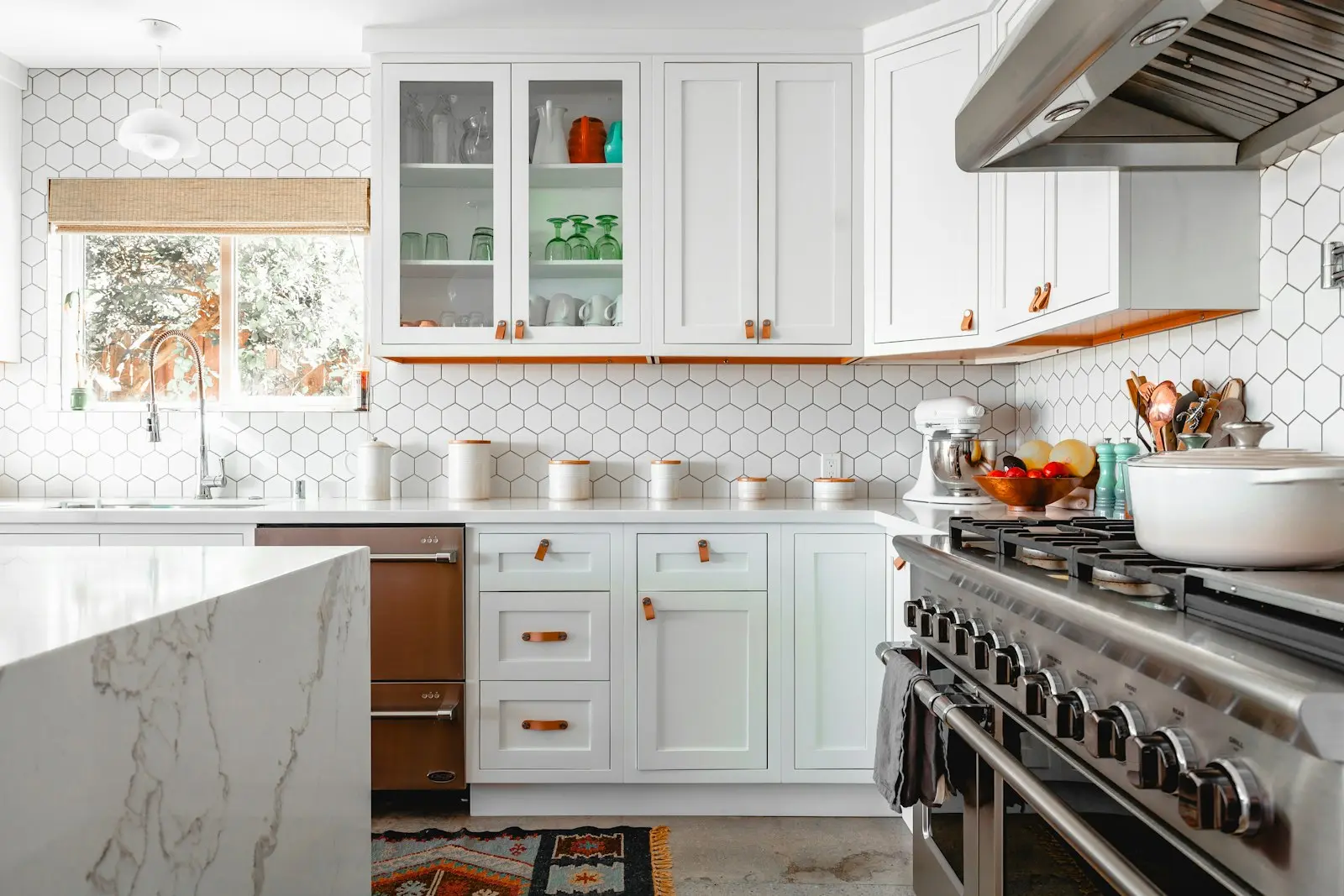
So What Does a Kitchen Renovation Cost in 2026?
Start with the number everybody quotes. Angi's 2026 data, drawn from about 13,100 projects completed by its pros, lands the national average at roughly $27,000. The typical spread is $14,600 to $41,500, and per square foot you'll see $75 to $250.
That's a wide net. A 70-square-foot galley with new fronts and a 250-square-foot open plan with an island both live inside it.
Owners report something different, and it's worth knowing why. The 2026 Houzz kitchen study surveyed 1,780 homeowners and found a median of $20,000 for a minor remodel and $55,000 for a major one, where major means every cabinet and appliance was replaced. Houzz also split major jobs by size: $46,000 for smaller kitchens, $75,000 for kitchens of 250 square feet or more. Those are what people said they spent, for work finished by mid-2025, not adjusted for inflation. Contractor price guides and owner surveys measure different things, so don't average them.
| Scope | Typical 2026 spend | Source |
|---|---|---|
| Minor (some cabinets or appliances swapped) | $20,000 median | Houzz owner survey |
| Midrange minor, modeled | $28,458 | Zonda Cost vs. Value 2025 |
| National average, all scopes | about $27,000 | Angi pro data |
| Major (all cabinets and appliances) | $55,000 median | Houzz owner survey |
| Major, 250 sq ft or more | $75,000 median | Houzz owner survey |
Where Does the Money Go, Line by Line?
I read through four 2026 cost guides for this, and the honest finding is that the percentages disagree. They disagree in the same direction, though, which makes the order of the list trustworthy even when the exact shares aren't.
- Cabinets and hardware: the largest line, roughly 25 to 35 percent of most budgets. HomeLight lists installed prices of $100 to $300 per linear foot for stock, $200 to $650 for semi-custom and $500 to $1,200 for custom.
- Labor and installation: Angi puts it near 25 percent. Other guides run from the high teens to well past 40.
- Appliances: often 10 to 15 percent. A fridge alone spans $200 to $5,000 in HomeLight's survey of the market.
- Countertops: commonly 10 to 15 percent. Granite lands around $2,000 to $4,000 in that same survey, quartz anywhere from $1,500 to $8,000.
- Flooring, lighting, plumbing, backsplash, permits: each a few percent, together a surprisingly big chunk.
My opinion, and you can disagree: cabinets are where a budget kitchen should stay boring. Stock boxes with decent doors and good hardware look fine for a decade. Upgrading to custom to fix a layout problem is paying a premium for a drawing you could have changed for free.
Why Is Labor the Slippery Number?
Because it depends on what you call labor. Some guides count only the carpenters and tradespeople on site. Others fold in demolition, design time, permits and the dumpster. Angi's roughly 25 percent and a contractor blog's 40 to 60 percent can both be honest for different definitions.
Here's a practical test. Ask three bidders for the same kitchen and make each one split the quote into materials, installation labor, trade work (electrical, plumbing), and everything else. If the labor lines differ by more than the material lines do, you're comparing scopes, not prices.
The national wage anchor is modest and public: the Bureau of Labor Statistics reports a median of $28.51 an hour for carpenters as of May 2024. Specialist trades and big-city shops charge a lot more than that once overhead is added, but it tells you what the floor looks like.
How Much Do Region and Kitchen Size Change the Bill?
A lot, and this is the part I can't give you a clean table for. I searched for city-by-city figures and found nothing I'd trust. The tables that exist are mostly unsourced contractor marketing, and a few claim a mid-range kitchen costs nearly double in a coastal metro compared with the Midwest. That may well be true. I just can't point you to a measured source for it.
What the sources do support:
- Local labor rates are the main regional lever. Angi and HomeLight both say so without publishing a city table.
- Size matters more than people expect. Houzz's major-remodel median jumps from $46,000 to $75,000 once a kitchen passes 250 square feet.
- Moving plumbing, gas or walls pushes a job from midrange to major almost by itself.
The workable method is boring. Take the $75 to $250 per square foot Angi range, multiply by your floor area, then replace the guess with three written local quotes before you commit to anything.
Will the Renovation Pay You Back?
Partly. Zonda's 2025 Cost vs. Value report modeled a midrange minor kitchen remodel at $28,458 in job cost and $32,141 in added resale value, so 112.9 percent recouped, ranked fifth among its projects. That's a modest, keep-the-layout scope. HomeLight's guide, citing the same report, lists a major upscale remodel adding about $58,561 of value for roughly 36 percent recouped (I couldn't open the original table to check that one). The pattern is plain either way: the more you spend, the less of it comes back.
A kitchen you'll live in for ten years is a different calculation from one you're flipping. Spend on what you touch daily.
How Should You Set the Budget?
HomeLight's rule of thumb is a third on cabinetry, a third on other upgrades, and a third on labor. It's crude, and it works as a first sketch. Then add a contingency of 10 to 20 percent, because opening a wall in a 1970s kitchen has never once revealed less work.
Do you also have an insulation or heating job pending? Kitchens often get opened up at the same time as exterior walls. If so, the exterior foam cost breakdown and the fall 2026 HVAC numbers will help you decide what goes first. And once appliances are on the list, the smart dishwasher buying guide and the smart fridge buying guide cover two of the biggest line items in detail.
None of the national averages above is a quote. They're a sanity check. If a bid lands far outside the $75 to $250 band, ask why in writing.