
TL;DR - Standing seam steel is the best all-round metal roof for most US homes: 50 to 70 year lifespan, around 10 to 14 USD per sqft installed in 2026, concealed fasteners that don't leak, and Class 4 hail ratings available. Aluminum costs a bit more and is the right pick near saltwater. Copper and zinc are heritage-grade options at roughly 16 to 40 USD per sqft. Skip exposed-fastener corrugated for a primary residence unless the budget forces it.
Metal roofing has gone from agricultural building material to the second most common residential roofing choice in the US. The Metal Roofing Alliance reported that metal captured roughly 18 percent of the residential roofing market in 2023, in a July 2024 release, and steel makes up about 82 percent of that metal. Other industry summaries put the 2024 share closer to 17 percent. Either way, it's no niche anymore.
The reasons are practical. Longer lifespan, better treatment from some insurers, and looks that fit modern farmhouse, contemporary and traditional designs. The bigger questions are which profile, which material, and whether it's worth paying a premium over asphalt.
Prices have also moved. One 2026 cost guide notes that tariffs on steel and aluminum, with Section 232 duties reportedly reaching 50 percent in mid-2025, pushed material costs up meaningfully, and that skilled metal-roofing crews remain hard to book. Treat any number below as a range to check against local quotes, not a promise.
What Are the Three Main Metal Roof Types?
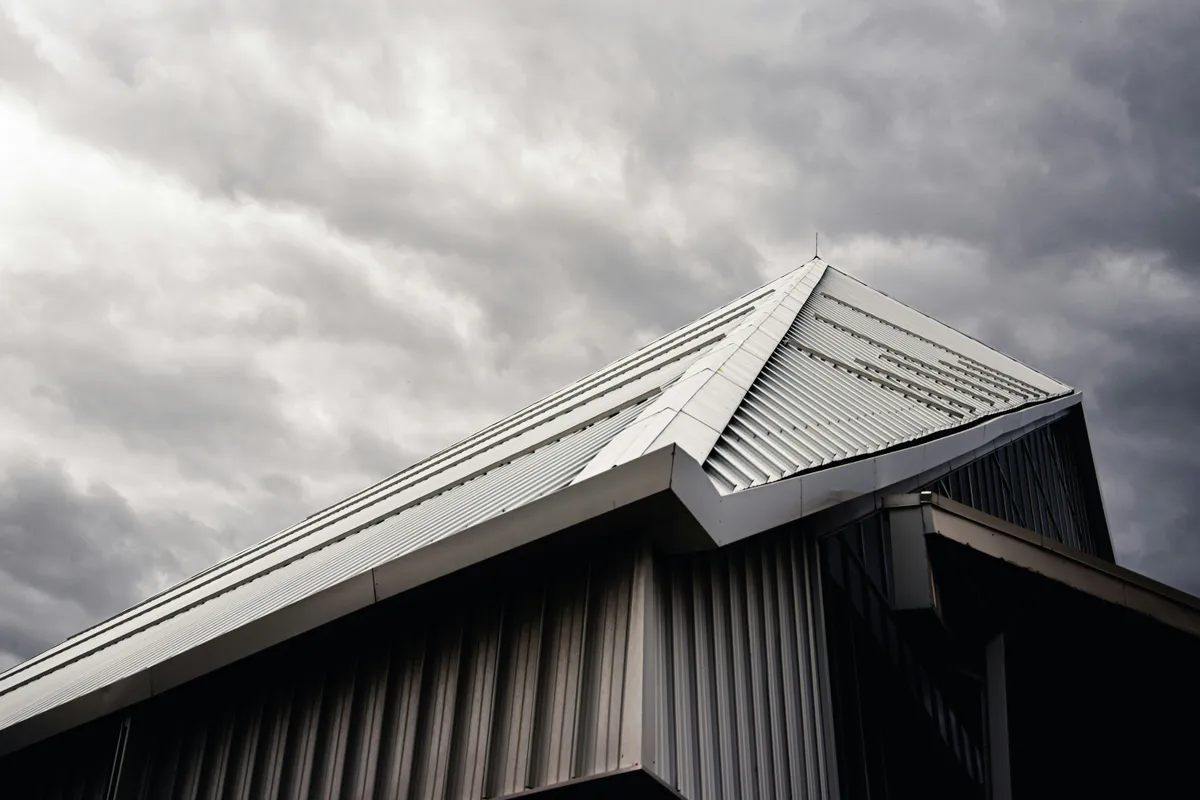
Three profiles dominate residential metal roofing. Each has a different installation method, weather performance and look.
Standing Seam
The premium residential standard. Panels run continuously from ridge to eave with raised seams that interlock or are mechanically locked. All fasteners are concealed under the seams, so no exposed screws meet the weather.
Standing seam is the right choice for most homes. Lifespan for steel runs 50 to 70 years, and 2026 price guides put installed steel at roughly 10 to 14 USD per square foot. Aluminum standing seam lands around 12 to 16 USD. The concealed-fastener design removes the most common metal roof failure point, which is gasket failure under screw heads.
Two subtypes matter. Mechanically seamed panels, where the seam gets folded over with a seaming tool, are more weather-tight and suit low slopes. Snap-lock panels click together, install faster and cost less, but need a steeper pitch. Always check the manufacturer's minimum slope for the specific panel.
Corrugated (Exposed Fastener)
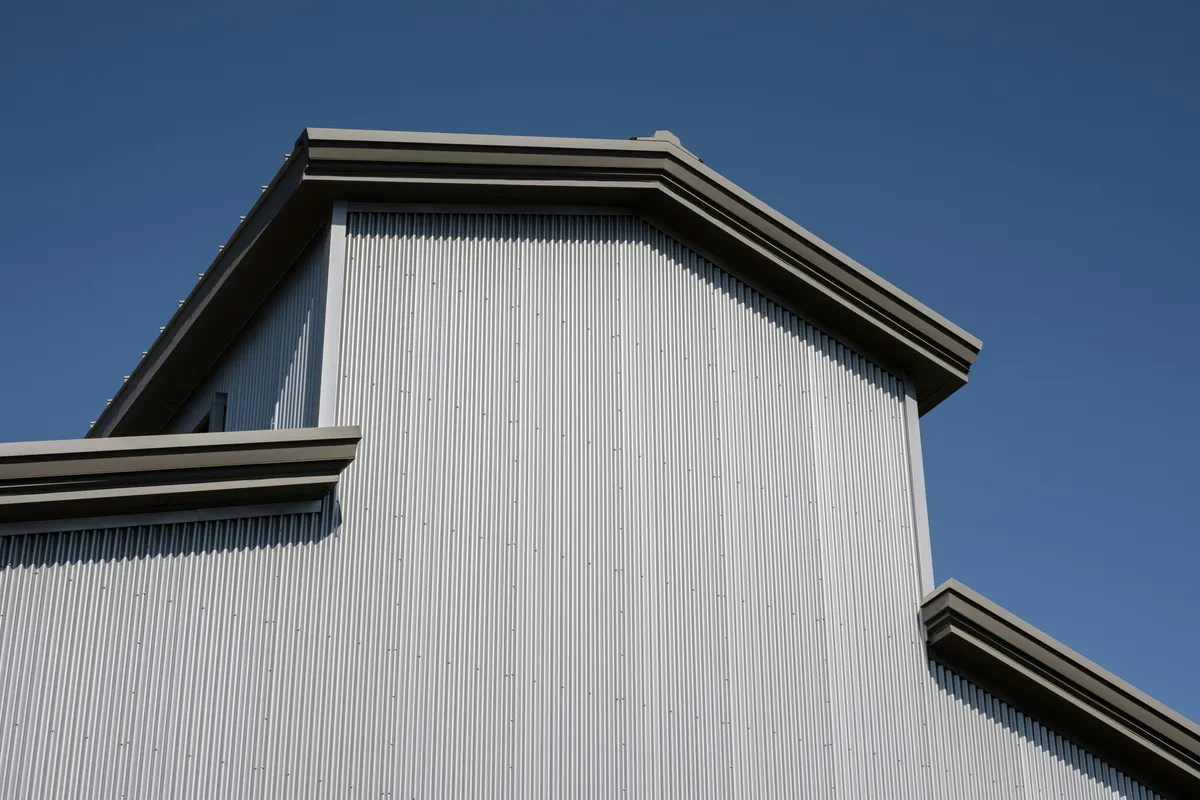
The agricultural classic. Wavy or ribbed panels are screwed straight through to the deck with rubber-gasketed screws. Installed cost runs about 7 to 9 USD per square foot for corrugated steel in one 2026 guide.
Cost is the main advantage. The exposed fasteners are the failure points, because the gaskets harden over time and every screw is a potential leak path. The look is agricultural, which suits barns, garages and some modern industrial designs and clashes with a traditional house.
For a primary residence, there's a strong case for skipping it unless a specific design or budget reason applies. For a detached garage or workshop, it's fine.
Metal Shingles
Press-formed panels that mimic slate, cedar shake or traditional shingles, installed in overlapping courses like asphalt. The fasteners hide under the next course up. Price guides list steel shingles at roughly 11 to 16 USD per square foot installed.
The benefit is aesthetic flexibility: a slate look with the weight and lifespan of metal. Brands such as DECRA make slate-look and shake-look metal shingles. The downsides are more labor than standing seam, since each piece is handled separately, and more seams for water to find.
Which Material: Steel, Aluminum, Copper, or Zinc?
Material choice matters more than profile for long-term performance.
Galvanized Steel and Galvalume Steel
The workhorse. Galvanized steel is coated with zinc. Galvalume is coated with an aluminum-zinc alloy, about 55 percent aluminum, roughly 43.5 percent zinc and 1.5 percent silicon according to Englert's published data. Englert's own comparison found Galvalume outlasting galvanized by 10 to 25 years in non-coastal settings.
One 2026 guide lists galvanized at 7 to 10 USD per square foot (40 to 60 years) and Galvalume at 9 to 12 USD (50 to 70 years). Panels are then finished with a baked-on paint coating such as Kynar 500 in whatever color you want.
Galvalume is the better pick in most installations. The premium over galvanized is modest, the lifespan gain is large, and the coating handles humidity better. Panel gauge matters too: 24-gauge is the usual residential standard, 26-gauge is a budget step down, and heavier gauges resist denting and oil canning better.
Aluminum
The right choice within a few miles of saltwater. Aluminum doesn't rust, so it holds up where steel panels corrode at scratched edges. One guide recommends aluminum within 10 miles of coastal salt air.
Cost: about 12 to 16 USD per square foot installed for standing seam. Aluminum is also much lighter than steel, which helps with structural load and shipping to remote sites. Inland, the premium is hard to justify. Near Cape Cod, the Outer Banks or the Florida coast, it's worth paying.
Copper
The heritage material. Copper develops a green patina over years and can last a century or more. Cost: 2026 guides put it at roughly 25 to 40 USD per square foot installed for standing seam, with one source reporting copper trading near 4.85 USD a pound on COMEX in early 2026 and noting that every 0.50 USD swing in the metal moves a 1,500 sqft roof by about 2,250 USD.
That makes a 2,400 sqft copper roof a 60,000 to 96,000 USD project. This is landmark restoration and custom architecture territory, not "a good roof on an ordinary house". A small copper porch or bay-window roof is the more realistic way in.
Zinc
The European architect's choice. Zinc has a long lifespan and a softer grey patina, and it's popular on commercial and residential buildings across Europe. Brands such as VMZINC and Rheinzink sell into the US. Installed cost varies widely between guides, with one range at 16 to 28 USD per square foot.
Small scratches in zinc tend to weather over as the patina reforms, which is the source of its "self-healing" reputation. It's the right choice where copper would look too traditional and painted steel too utilitarian.
How Much Does a Metal Roof Cost Installed?
The table uses 2026 price-guide ranges for a 3,000 sqft roof. Asphalt is included for reference. Your local quote will differ.
| Material and Profile | Cost Per Sqft Installed | Total for 3,000 sqft | Typical Lifespan |
|---|---|---|---|
| Asphalt shingles (reference) | 3-5 USD | 9,000-15,000 USD | 15-30 years |
| Corrugated steel | 7-9 USD | 21,000-27,000 USD | 40-50 years |
| Galvanized steel panels | 7-10 USD | 21,000-30,000 USD | 40-60 years |
| Galvalume steel panels | 9-12 USD | 27,000-36,000 USD | 50-70 years |
| Standing seam steel | 10-14 USD | 30,000-42,000 USD | 50-70 years |
| Steel shingles | 11-16 USD | 33,000-48,000 USD | 40-70 years |
| Aluminum standing seam | 12-16 USD | 36,000-48,000 USD | 50+ years |
| Zinc standing seam | 16-28 USD | 48,000-84,000 USD | 70-100 years (manufacturer claims) |
| Copper standing seam | 25-40 USD | 75,000-120,000 USD | 100+ years |
A few notes. Standing seam estimates assume an ordinary roof with a few valleys and a chimney. Complex roofs with many hips, dormers and skylights cost more in labor. Tear-off of an existing roof is usually priced separately. And a cheap bid isn't automatically a bargain: in a market where price tracks workmanship, the lowest number often comes from corners cut on flashing.
Insurance can offset some of the cost in hail country. Many insurers discount Class 4 impact-rated roofs, commonly 5 to 35 percent depending on state and carrier, so ask your own agent for a written quote before you commit.
Does a Metal Roof Reduce Cooling Costs?
It can, with the right color. The Department of Energy's Consumer Guide to Cool Roofs says a cool color roof can shave at least 5 percent off a home's cooling costs, with bigger savings in hot, sunny climates.
Color matters more than material. Light colors reflect more sunlight than dark ones, and cool-pigment finishes let darker shades reflect more than ordinary paint does. Look for a Cool Roof Rating Council or ENERGY STAR listing on the specific panel instead of trusting a generic percentage.
In cooling-dominated climates such as Texas, Florida and Arizona, a light or cool-pigment finish is the sensible default. In heating-dominated regions, the cooling savings matter less, so color becomes more of a style choice.
How Does Metal Roofing Handle Snow and Hail?
Snow first. Smooth metal panels let snow slide, often as a slab. That's a hazard over doors, paths and driveways, and it can crush plantings or rip gutters. Snow guards or snow rails solve it by holding snow in place until it melts off gradually. Current price guides show bar-style systems at about 7 to 17 USD per linear foot installed, while pad-style guards are priced per unit.
Hail is a different question. UL 2218 rates impact resistance from Class 1 to Class 4. The Class 4 test drops a 2-inch steel ball from 20 feet, and the roof passes if it doesn't crack or tear, even when it dents. Whether a given metal roof qualifies depends on the tested assembly, so look for the manufacturer's UL 2218 listing for the exact panel and gauge instead of assuming that any 24-gauge steel qualifies.
Cosmetic damage and functional damage aren't the same thing. A Class 4 metal roof can dent visibly and stay watertight. Some insurers offer the roof discount only if you accept a cosmetic damage exclusion, often a standard endorsement, which means dents won't be paid for. Is a discount worth a roof that may carry permanent dimples? That depends on how much you care about looks, and the choice belongs to you.
Working through other major exterior upgrades? See the related guide on pruning fruit trees for managing the landscape around a new roof install, especially keeping trees from rubbing against the panels.
What About Solar?
Standing seam is the friendliest roof for solar panels. Clamps such as the S-5! range grip the seam without drilling through the panel, so there are no new holes to flash and the roof warranty typically stays intact. The clamp maker also says rail-less mounting systems cut installation time by 30 to 50 percent compared with traditional rails and puts its hardware cost at around 0.12 USD per watt on small systems, though that's a manufacturer's figure and worth checking against a quote.
If you're planning solar in the next decade, standing seam makes a stronger case. Corrugated and shingle profiles generally mean penetrating fasteners and extra flashing, which complicates the installation.
What Are the Common Installation Mistakes?
Three show up repeatedly.
Mistake one: oil canning, the wavy distortion you see on some flat panel areas in certain light. Causes include wide panels, thin gauge and poor allowance for thermal movement. Narrower panels, heavier gauge and rib striations all reduce it, and some manufacturers sell striated profiles specifically to hide it.
Mistake two: weak underlayment. Skip the self-adhering membrane at eaves and valleys and ice dams will find the weak spots. Building codes in snow country usually call for an ice-barrier membrane at the eaves, so check your local code and the panel manufacturer's installation guide.
Mistake three: mismatched fasteners. Steel screws on aluminum panels set up galvanic corrosion that attacks both metals over time. Use fasteners compatible with the panel metal, and ask the installer to say in writing which ones they're using.
Which Metal Roof Should You Choose?
The questions worth working through before you specify a metal roof:
- Is your house within a few miles of saltwater? If yes, aluminum standing seam. If no, continue.
- Is your budget under about 20,000 USD for a 3,000 sqft roof? If yes, asphalt or corrugated steel. If you can stretch to roughly 27,000 USD, Galvalume panels are in reach, and standing seam steel starts around 30,000 USD.
- Do you live in a hail belt (TX, OK, CO, NE, KS)? Look for a Class 4 listed panel and read any cosmetic damage endorsement before you sign.
- Are you in a snow belt? Standing seam with snow guards over every door, path and driveway.
- Heritage or landmark home with a multi-generational horizon? Copper or zinc, depending on the look.
- Modern home with a contemporary look? Standing seam in dark bronze or black, with a cool-pigment finish if the climate is hot.
The honest recommendation: standing seam Galvalume steel with a Kynar-type finish is the sensible answer for most US residential metal roof projects. Get at least three written quotes from contractors with a record of metal installs, not general roofers who occasionally do metal, and compare them line by line. Ask each one about flashing details, underlayment and fasteners, because that's where metal roofs fail.