Two weeks ago the job was phone calls. Our September checklist was almost entirely about getting onto somebody's calendar before the first cold snap filled it, and it deliberately told you to wait on several things: the gutters, the irrigation blowout, the outdoor taps.
October is when you stop waiting. This list is short, it needs no contractor, and every item on it shares one deadline: the first hard freeze. That date moves by a few weeks depending on where you live, which is why nobody can hand you a calendar. What they can hand you is an order of operations.
So why does the easiest list of the year get skipped most often? Because nothing on it sends a reminder. The appliance jobs on the late summer checklist at least had apps nagging about half of them.
The Second Gutter Pass, and Why the First One Failed
If you cleaned the gutters in early October, they're already full again. That's not carelessness, it's arithmetic: leaf drop takes weeks, and a trough under a mature oak refills within a fortnight. The September list budgeted for two cleanings for exactly this reason.
The one that matters is the late one, after the trees near the house are bare. Whatever is sitting in the trough when the temperature drops is what the ice forms around, and a frozen gutter stops draining while the roof above it keeps melting. That's how water ends up behind the fascia rather than in the downspout.
While you are up there, check that the downspouts still discharge away from the foundation. A splash block knocked sideways in summer becomes a basement problem in a thaw, which is a slower and far more expensive version of the same water. If that foundation is already a weak point, our piece on the basement moisture trap is the one to read before you insulate anything down there.
Hose Bibs Come Before the Sprinklers
Here's the order people get wrong. The irrigation blowout gets booked and everyone relaxes, while the outdoor taps, which are not part of that job, sit with hoses still screwed onto them.
Take the hoses off. All of them, today, before anything else on this list. A frost-free sillcock works by draining through the spout into the pitch of the pipe, and a hose attached to it holds that water inside the wall. The valve body splits, quietly, and nobody finds out until somebody opens the tap in April and the wall gets wet. How many burst-pipe callouts in spring started as a garden hose nobody bothered to unscrew in October? Drain the hoses, coil them, store them somewhere that is not the ground.
Then the blowout itself, which for most cold-winter regions lands between mid-October and early November, before overnight lows sit at freezing. If you booked it in September you've already got a date. If you resent the whole exercise every year, that is a decent argument for a grass-less lawn rather than a better controller.
Why Does the Dryer Belong on a Freeze Checklist?
Because October is when the house closes up and the laundry stops going outside, and because the outdoor vent flap is about to spend four months under snow. NFPA is blunt about the risk: the leading cause of home clothes dryer fires is failure to clean them, and its own guidance is to clear lint out of the vent pipe once a year, or more often if drying is taking longer than it used to.
Once a year has to be some month. Make it this one. Pull the dryer out, disconnect the duct, and clear the run, not just the lint screen. Then go outside and check that the flap actually opens when the dryer is running. A flap held shut by a bird's nest or a bent louver turns the whole duct into a lint trap, and you won't notice from inside.
Reverse the Fans, Then Switch Them Off
ENERGY STAR's advice is to reverse the motor and run ceiling fans at low speed in the clockwise direction for winter, against counterclockwise in summer. Clockwise and slow pushes the warm air that has collected at the ceiling back down the walls without putting a draft on anyone.
The half of that guidance everyone skips is the next line: fans cool people, not rooms. A reversed fan in an empty bedroom is a motor running for nobody. My honest opinion is that fan reversal is oversold as a heating measure and undersold as a comfort one. It won't move your gas bill much. It will stop the upstairs feeling stuffy while the downstairs feels cold, and that is worth the thirty seconds it takes to flip the switch on the housing.
The Alarms Nobody Tests Until They Chirp
Every combustion appliance in the house is about to start running in a building with the windows shut. NFPA's rules are short enough to act on in ten minutes: test smoke alarms monthly, and replace any alarm 10 years after the manufacturing date printed on the back of the unit.
Read the dates. That's the part people never do, and it's the part that decides whether you are testing a working alarm or a dead one that still beeps. An alarm past its date passes a button test and can still fail on smoke, because the sensor degrades and the button only checks the horn. When did you last turn one over and actually look? While you have the ladder out, the attic is right there, and attic duct insulation is the one heating job that pays back the same winter you do it. Thinking of topping up the insulation while you're there? The attic insulation cost calculator shows what bags and a crew would each cost.
Cover the Condenser's Lid, Not the Condenser
This one gets an argument every year, so here's my side of it. Don't shrink-wrap the outdoor unit. A condenser is built to sit outdoors in weather, and a full cover does two things you don't want: it stops the cabinet drying out between thaws, and it turns the inside into a dry, sheltered, mouse-sized hotel with the wiring already installed.
A cover sized to the top is enough. It keeps sheet ice and falling debris off the fan blades and leaves the sides open. If you've already bought the full wrap, use it in the spring as a dust cover in the garage.
One Saturday, No Phone Calls
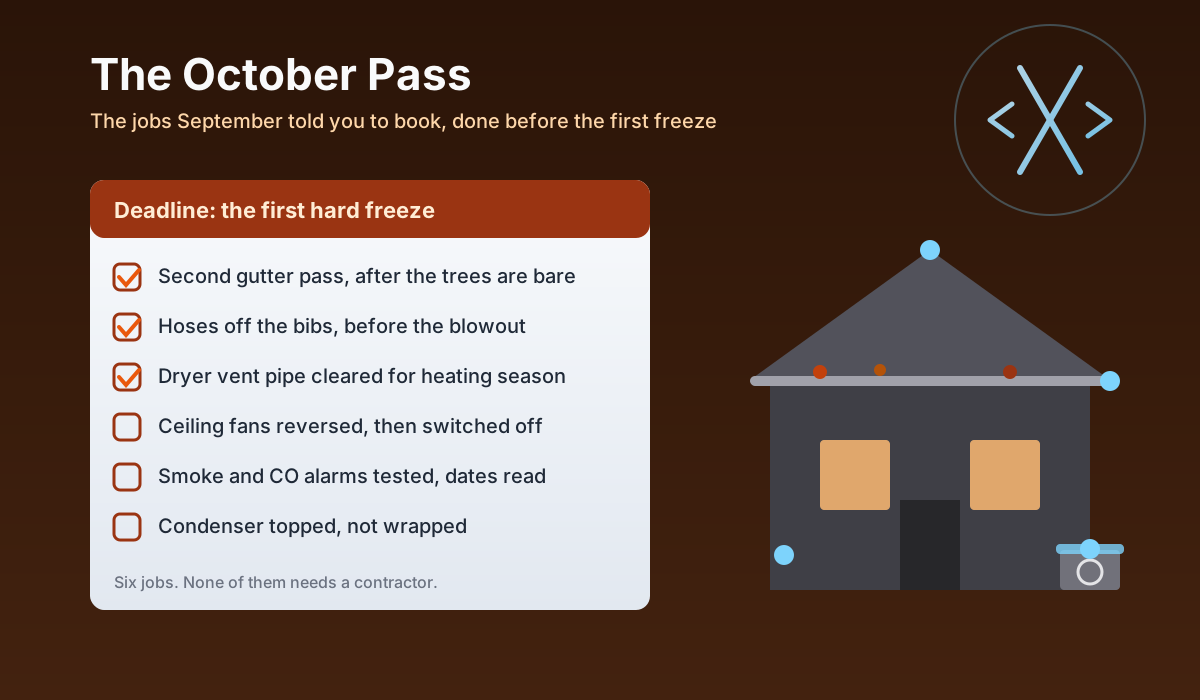
That's the list. Gutters once more, hoses off, vent cleared, fans flipped, alarms dated, condenser topped. It is the first seasonal pass in months that needs nobody's calendar but yours, which is precisely why it's the one that slides. Start with the hoses, because that is the item where waiting a week actually costs money.