Three weeks ago the list was gutters and hoses. The October checklist was a Saturday outside, racing the first hard freeze, and if you did it, the outside of the house is done until spring.
November moves indoors. Every job here happens in the basement, the attic, or at a thermostat, and none of it has a freeze date. That's the trap. October had a deadline that did the nagging for you; November has a furnace that already works, so why open the utility room door at all?
Because this is the month the house starts running at full load, windows shut, every combustion appliance lit. The failures that follow aren't frozen gutters. They're a water heater that scalds, a space heater three feet from a curtain, and a window that drips every morning. Here's the list, in the order I'd do it.
Water Heater: Set 120F, Then Drain a Bucket
Start with the dial. The Consumer Product Safety Commission's tap water scald guidance urges every household to lower the water heater to 120 degrees Fahrenheit, and the reason is a timetable: third-degree burns in two seconds at 150F, six seconds at 140F, thirty seconds at 130F. At 120F it takes five minutes. Plenty of tanks are set higher than that, and the majority of scald injuries land on children under five and the elderly. The same setting also saves fuel, which CPSC lists as the second reason, not the first.
Then the sediment. A tank that has sat through a year of heating cycles has a layer of mineral grit on the bottom, and that layer sits between the burner and the water. Hook a hose to the drain valve, run it to a floor drain or a bucket, and let a few gallons out until it runs clear. On an old tank that has never been drained, don't. A valve that hasn't moved in a decade may not close again, and November is a bad month to find that out.
Lift the lever on the temperature and pressure relief valve for a second while you're there. It should hiss and reseat. If it keeps dripping afterwards, that's a plumber's call, not a Saturday one.
Why Do Heating Fires Belong on a November List?
Because of what the calendar does next. NFPA's heating safety figures for 2020 to 2024 put heating equipment at 37,365 home fires a year, 11 percent of all of them, with 417 civilian deaths. Nearly half of those fires (46 percent) fall in December, January and February. November is the last month before that window opens.
The number that should change behaviour is the split. Space heaters and heating stoves account for roughly 30 percent of heating fires, and 73 percent of the deaths. A third of the fires, nearly three quarters of the people. That isn't a device problem; it's a placement problem. NFPA's rule is three feet of clearance from anything that burns, and its yearly-inspection rule covers every heating appliance and chimney, which you should already have booked from the September checklist.
Space heaters start about a third of home heating fires and cause seven in ten of the deaths. Three feet of clearance is the entire safety plan.
Where did last winter's heater live? If the answer is "under the desk, against the curtain," the fix costs nothing. Move it. Plug it straight into the wall, never a power strip, and switch it off when you leave the room. If a room needs a heater every single evening, the house has a heating problem worth pricing, and fall HVAC upgrade costs is the place to start.
CO Alarms Are a Separate Device
Smoke alarms got their check in October. Carbon monoxide alarms are a different sensor with a different job, and the CPSC puts CO deaths from consumer products at more than 200 a year, with more than 100 of those linked to portable generators. Its placement rule is short: one on every level, outside the sleeping areas. Press the test button on each, and read the date on the back, because CO sensors age out just as smoke alarms do.
The generator rule belongs here too, since November storms are when people buy them. Outdoors only, at least 20 feet from doors, windows and vents, exhaust pointed away. Ready.gov says the same thing and adds one more: never heat a house with a gas oven or stovetop.
Pipes: Insulate First, Then Learn the 55F Rule
The Red Cross guidance on preventing frozen pipes names the lines that freeze: supply pipes in unheated interior spaces like basements, crawl spaces, attics and garages, the runs under kitchen and bathroom cabinets, and anything along an exterior wall with little insulation behind it. Walk those routes with a flashlight. Foam pipe sleeves slip on in seconds; UL-listed heat tape handles the runs a sleeve can't protect. Both hot and cold lines get wrapped, because the hot one freezes too.
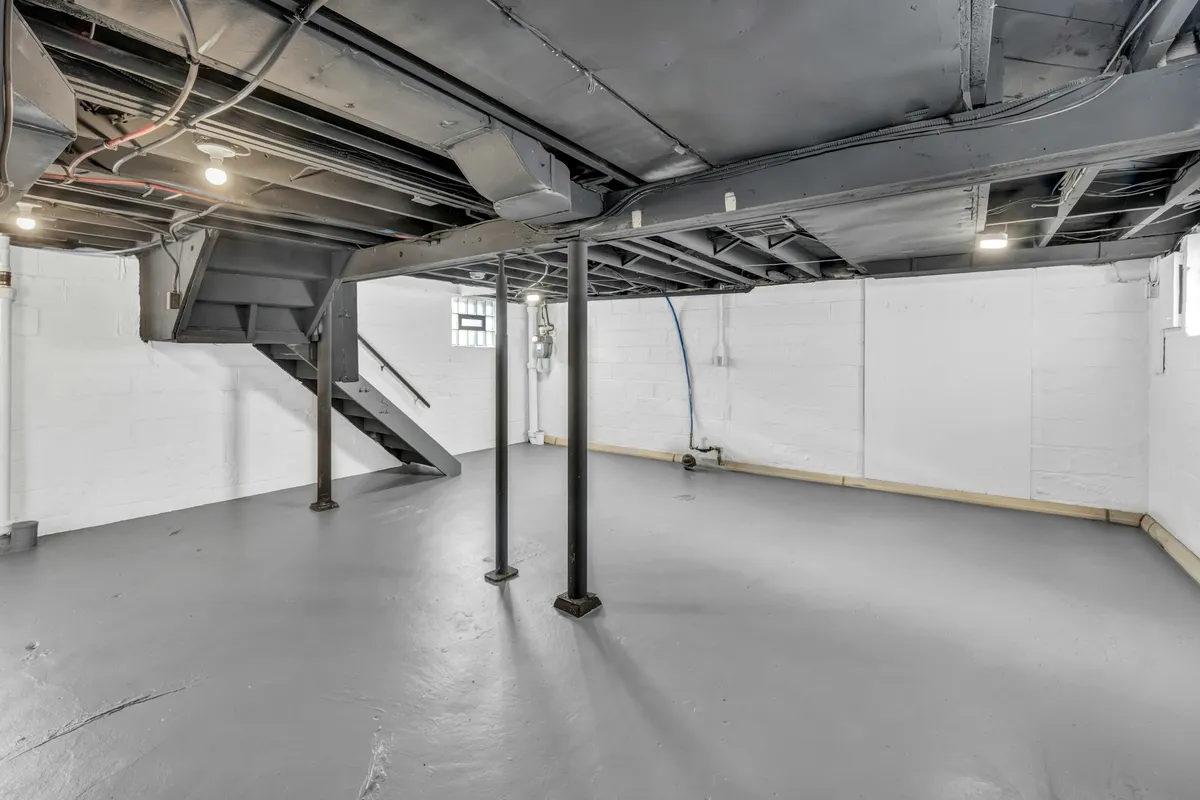
Then the number everyone asks about. If you leave the house in cold weather, the Red Cross says to keep the heat on at no lower than 55F. Not off, and not 45 to save money. The same guidance covers the cold snap itself: let the faucet served by an exposed pipe drip, open the cabinet doors under sinks so warm room air reaches the plumbing, and hold the thermostat at one temperature day and night while the freeze lasts.
One more thing while you're on your knees down there. Find the main water shutoff and turn it a quarter turn each way so you know it still moves. A burst pipe does not wait while you look for the valve. And if the basement walls are already damp, that's a different problem, and our piece on the basement moisture trap explains why insulating over it makes things worse.
Sump Pump: Pour a Bucket, Watch It Run
If the house has a sump pit, November is the last easy test before the pit matters. Pour a bucket of water in until the float lifts. The pump should start, drain the pit, and stop without running on. Listen for grinding, and check that the check valve on the discharge line holds, or the same water falls straight back and the pump cycles all night.
Then go outside and look where that discharge line ends. A pipe that dumps at grade will freeze solid in the first cold week, and a pump pushing against a plug of ice either burns out or sends the water back into the basement. Keep the run sloped and keep the outlet clear of the leaves October's second gutter pass left behind. If the line has a flexible extension, make sure it isn't the kind that collapses under snow.
Window Condensation Is a Humidity Reading, Not a Window Problem
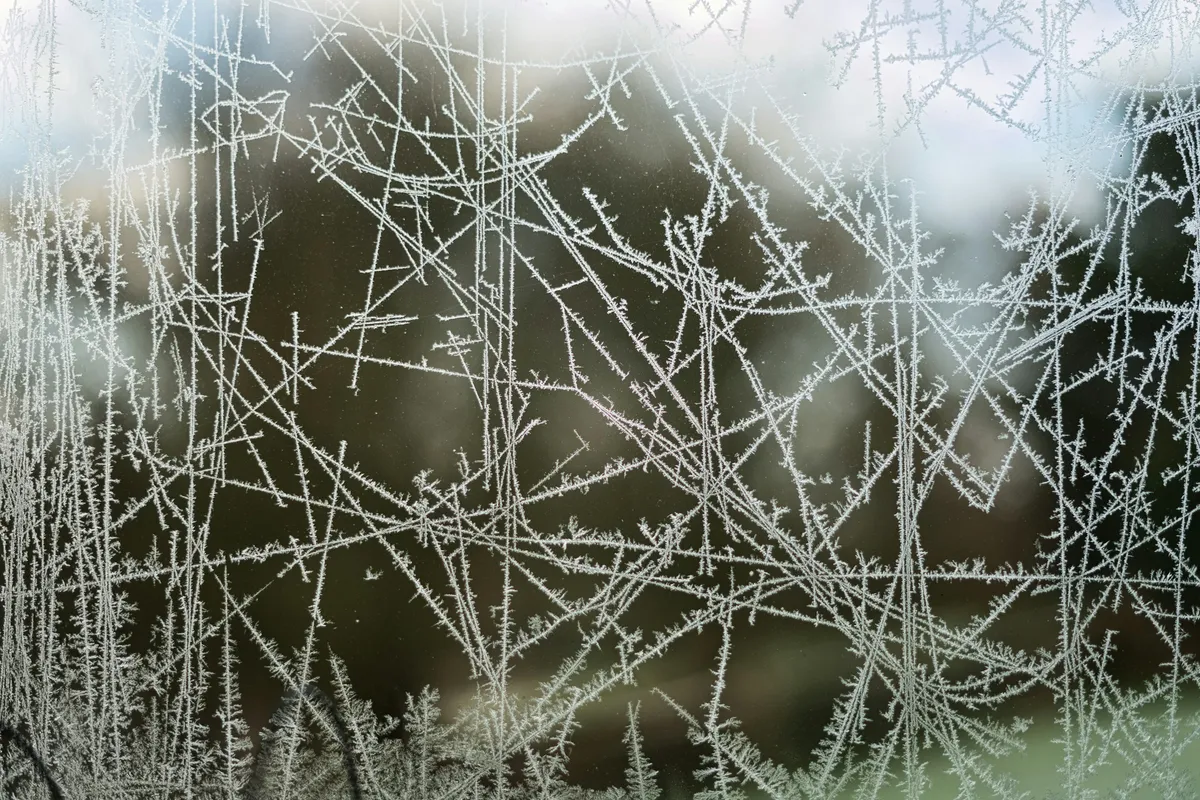
The first cold mornings bring the first wet windows, and the usual reaction is to blame the glass. Mostly it isn't the glass. It's the indoor air, now sealed in with every shower and every pot of pasta, condensing on the coldest surface in the room.
The EPA's mold and moisture guide sets the target at 30 to 50 percent relative humidity, below 60 at the very most, and tells you to dry wet windows and walls quickly and cut off the source. A cheap hygrometer on the windowsill turns that from a guess into a number. Reading 58 in November? You're already at the ceiling before the real cold arrives.
The fixes are the dull ones: run the bathroom fan during and after showers, use the range hood, crack a window after cooking. If the bath fan vents into the attic rather than outside, you've moved the problem up a floor, and attic insulation and bathroom moisture covers what that does to your insulation. Should you buy a dehumidifier? Measure first. Half the houses that think they need one just need a fan that actually runs.
Attic: The R-Value Check From the Hatch
Open the attic hatch with a tape measure and a flashlight. If you can see the tops of the floor joists above the insulation, there isn't enough. The ENERGY STAR R-value table is blunt about how much: in climate zones 4 through 8, an uninsulated attic should get R60, and one with three to four inches already there should still be topped up to R49. Zones 2 and 3 want R49 and R38 on the same two conditions. ENERGY STAR's own figure for air sealing plus insulation is up to 10 percent off annual energy bills.
Don't blow more insulation over an attic you haven't air sealed. The attic duct insulation guide explains the order of operations, and the moisture piece above explains why the order matters. While the hatch is open, weatherstrip its edge. It's a hole into the coldest space in the house, and most of them close on bare wood.
Thermostat: 7 to 10 Degrees, 8 Hours
The last indoor job is a schedule. The Department of Energy's winter savings steps give the number: set the thermostat 7 to 10 degrees lower for 8 hours a day while you're away or asleep and it can take as much as 10 percent off the heating bill for the year. Overnight plus the workday covers the 8 hours without anyone noticing.
The objection every year is that the furnace works harder catching up and wipes out the saving. DOE's answer is physics: a cooler house loses heat to the outside more slowly, so the recovery costs less than the hours of holding temperature it replaces. My own view, which some will dispute, is that a 10 degree setback is too aggressive for a house with cast iron radiators or a heat pump; those systems recover slowly and the comfort cost outruns the saving. Try 5 degrees first and see what the morning feels like.
The Storm Kit You Hope Not to Use
Ready.gov's winter checklist is the one item here that isn't maintenance, and it's the one most likely to be skipped because nothing is broken yet. The list is short:
- enough supplies to stay home for several days without power, food that needs no cooking included
- a flashlight that isn't your phone, and a power bank that's actually charged
- in the car: jumper cables, sand, a blanket, warm clothes, water and snacks, plus a full tank before the storm rather than during it
- medication for the week
A Winter Storm Warning typically gives 12 to 24 hours of notice. That's plenty if the box is already packed and nothing if it isn't.
One Afternoon, All of It Indoors
That's November. Water heater down to 120F and drained, heaters three feet clear, CO alarms dated, pipes wrapped, shutoff found, sump tested, hygrometer bought, attic measured, schedule set, kit packed. The whole pass takes an afternoon and most of it is checking rather than fixing. Start with the water heater dial, because that's the one item where nothing looks wrong until someone is already hurt.