XPS or Spray Foam: What Is the Short Answer?
Put foam against the concrete. That part is settled, and I've made the case for it before. The harder question is which foam, XPS vs spray foam: extruded polystyrene board (sold as FOAMULAR in US stores, and as Penoplex in parts of Eastern Europe) or closed-cell spray polyurethane.
On a flat poured wall, I'd pick the board. On rubble, fieldstone or crumbling block, spray foam, and I explained why old walls need it. Everything below is the reasoning, pulled from manufacturer datasheets, building code text and university extension work rather than a job site.
How Do They Handle Moisture Really?
Closed-cell foam gets sold as the moisture answer. So I read two datasheets side by side: Owens Corning's October 2025 sheet for FOAMULAR NGX 150, and Huntsman's for Heatlok HFO Pro, a closed-cell HFO foam.
| Property | XPS board (FOAMULAR NGX 150) | Closed-cell spray foam (Heatlok HFO Pro) |
|---|---|---|
| R-value per inch | R-5.0 at 75F, R-5.4 at 40F | R-7.4, aged |
| Vapor permeance at 1 inch | 1.5 perm maximum | 0.91 perm |
| Water absorption by volume | 0.3% max (ASTM C272) | 0.3% (ASTM D2842) |
| Install limits on the sheet | Cover within 60 days; 165F max service temperature | Cured, dry concrete; surface 5F above dew point; 2 inches max per pass |
Water absorption matches on paper, though the two numbers come from different tests, so don't read it as a tie to the decimal. Vapor permeance drops as either material gets thicker. And Building Science Corporation's Info-511 sheet wants basement foam to stay above 0.1 perm so the wall can still dry toward the room: it lists up to two inches of unfaced XPS (R-10) or three inches of medium-density closed-cell spray foam (R-18) as meeting that bar.
Where they really differ is contact
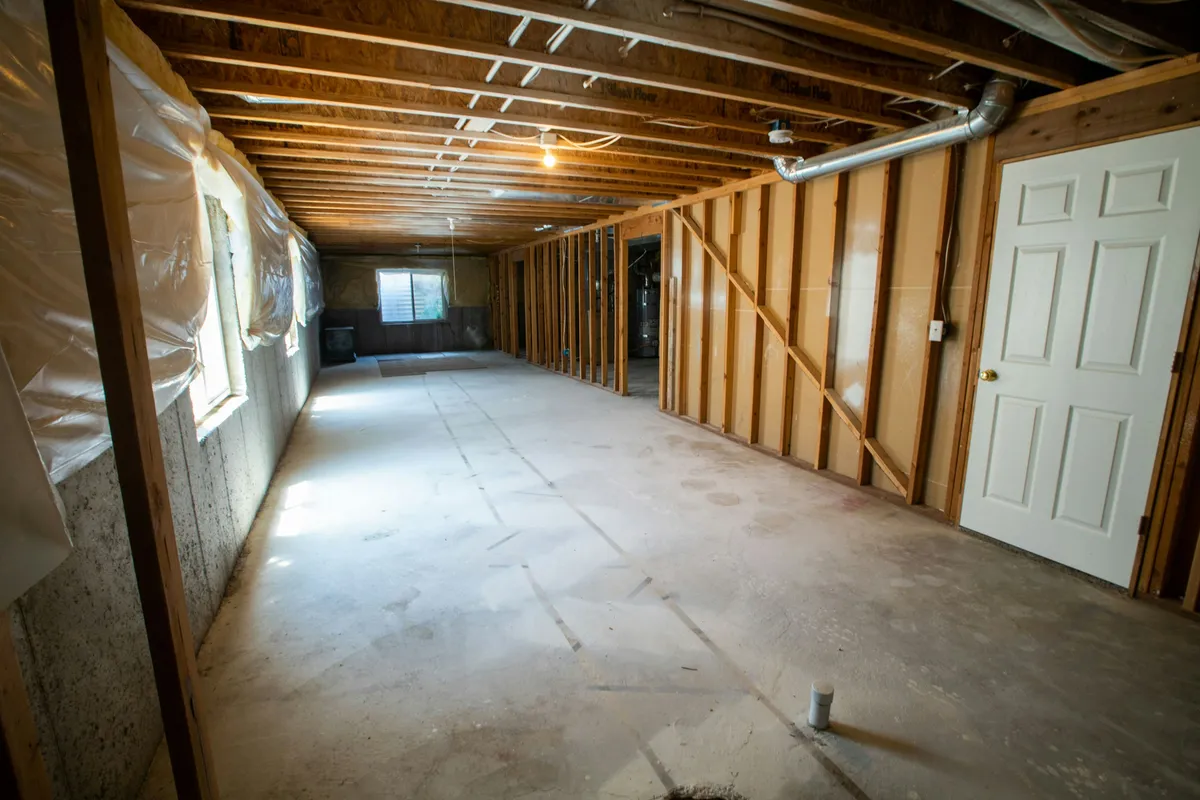
A rigid board touches a flat wall everywhere. On anything lumpy, it bridges, and warm room air finds the gaps behind it.
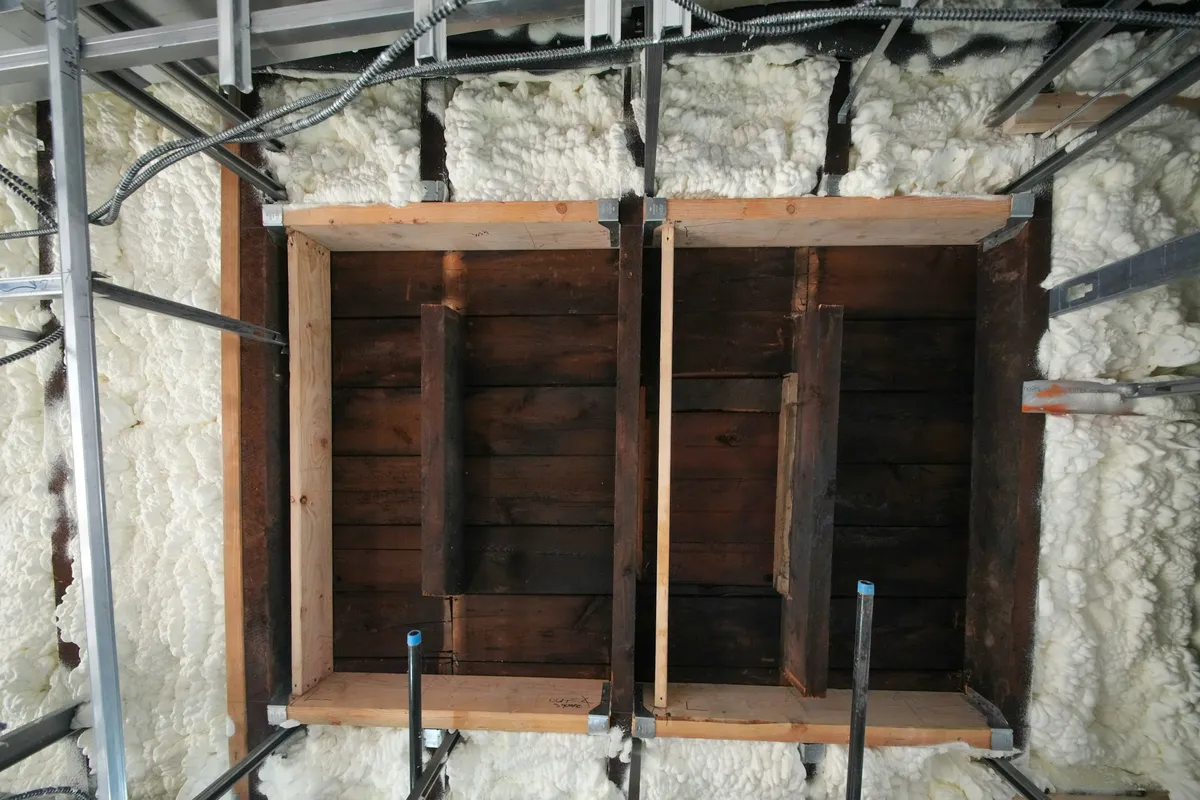
Spray foam bonds to whatever it hits. The catch? Huntsman wants the concrete cured and dry, with the surface at least 5 degrees F above the dew point. Is your basement wall sweating in August? Then it isn't ready for spray foam in August. The same sheet caps each pass at 2 inches (3 inches in a single pass as the stated alternative) because of heat buildup, and names spontaneous combustion as the hazard. A crew that sprays 4 inches in one go is breaking the maker's own rule.
On a flat poured basement wall, spray foam solves a problem rigid board never had.
Do Mice, Rats and Termites Care?
Neither material is food. Neither is pest-proof either, whatever a sales sheet implies. HomeGuide's spray foam guide lists deterring pests as a benefit; I don't buy it as a reason to choose.
The University of California's IPM program puts insulating foam on its list of gnawable materials that fail as plugs for mouse holes, and tells you to close anything wider than a quarter inch with metal or concrete. That's canned foam in a gap, not a wall of closed-cell, but the lesson carries. Density slows teeth. It doesn't stop them.
Termites are the bigger worry. Blake Layton, an extension entomologist at Mississippi State University, wrote in 2022 that termites don't eat spray foam but can tunnel through it or behind it, that foam makes inspections much harder, and that adding foam after a termite treatment may lead the pest control company to cancel its contract.
Rigid board shares the problem. Section R318.4 of the International Residential Code bans foam plastic on the exterior face of, or under, below-grade foundations in areas mapped as very heavy termite probability, unless an approved protection method is used. The 2021 edition I read, as adopted in Colorado, exempts foam on the interior side of basement walls. Local amendments decide, so ask your building department first.
What Does Fire Code Require?
Owens Corning's datasheet says basement walls can't be left exposed and need a thermal barrier such as drywall. IRC section R316.4 asks for half-inch gypsum board or a material that passes the NFPA 275 fire tests.
Spray foam has one extra route. Huntsman lists an NFPA 286 pass as an interior finish without the 15-minute thermal barrier, but only when coated with DC-315 at 18 mils wet. HomeGuide's 2026 basement guide pitches closed-cell foam for walls you plan to leave exposed; that only holds with a listed coating like that one.
What Does It Cost in 2026?
HomeGuide's February 2026 basement guide puts rigid board at $1.20 to $3.70 per square foot of wall installed. Its spray foam guide puts closed-cell at $3.00 to $5.00, and notes that many contractors charge a $1,000 to $2,000 minimum. Neither range states a thickness, so read them as a gap, not a quote.
Thickness comes from code. The 2021 IECC asks for R-10 continuous on basement walls in climate zone 4 (except marine) and R-15 continuous in zones 5 through 8. That's 2 or 3 inches of XPS, against about 1.5 or a little over 2 inches of Heatlok. States adopt editions on their own schedule, so check yours.
Which One Should You Pick, Wall by Wall?
- Flat poured concrete: 2 to 3 inches of XPS, seams taped, edges sealed with canned foam, stud wall and drywall in front. Competent DIY.
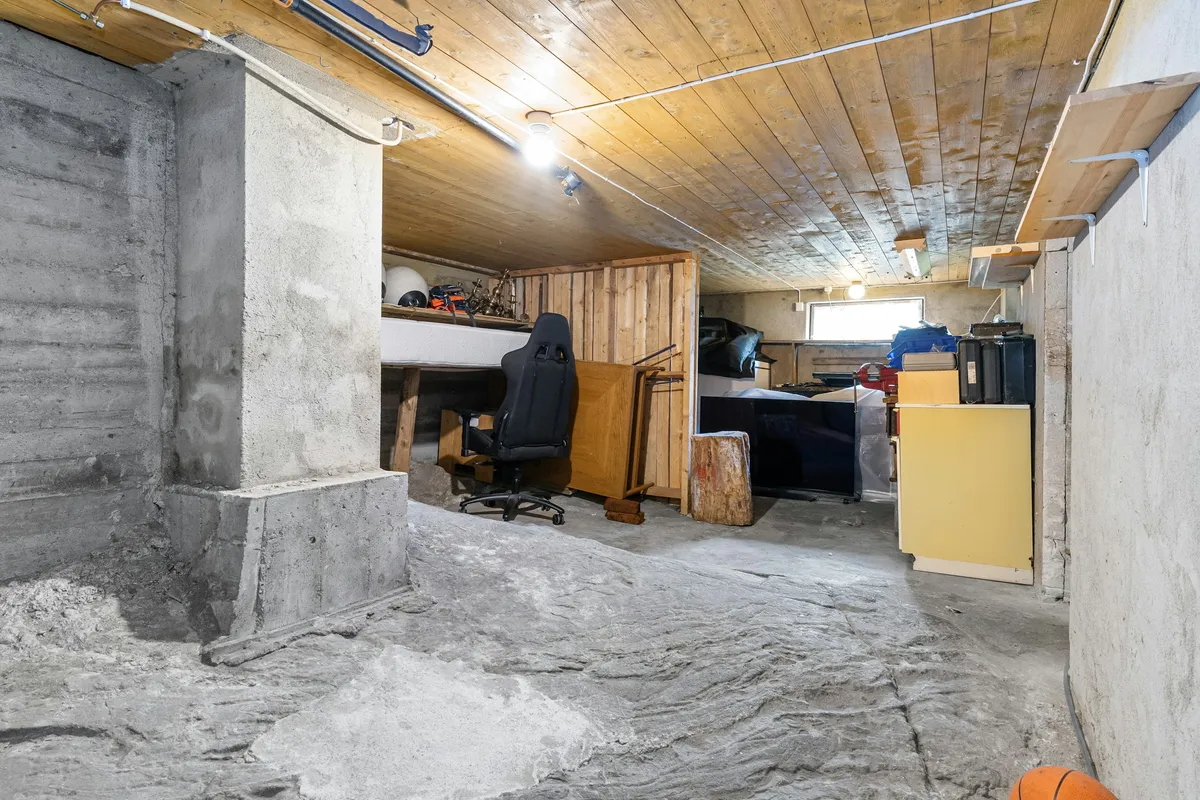
- Block, brick or rubble: closed-cell spray foam, hired out, sprayed in legal passes.
- Rim joist: spray foam, in my view, because cut board pieces there have to be sealed at every edge by hand.
- Very heavy termite area: talk to the pest control company before either.
Spray foam is the better material and, on a flat wall, the worse default. Before either goes up, fix the water outside; fall gutter work comes first. Above grade, the same physics drives exterior wall insulation problems, and our exterior foam cost breakdown prices the boards.